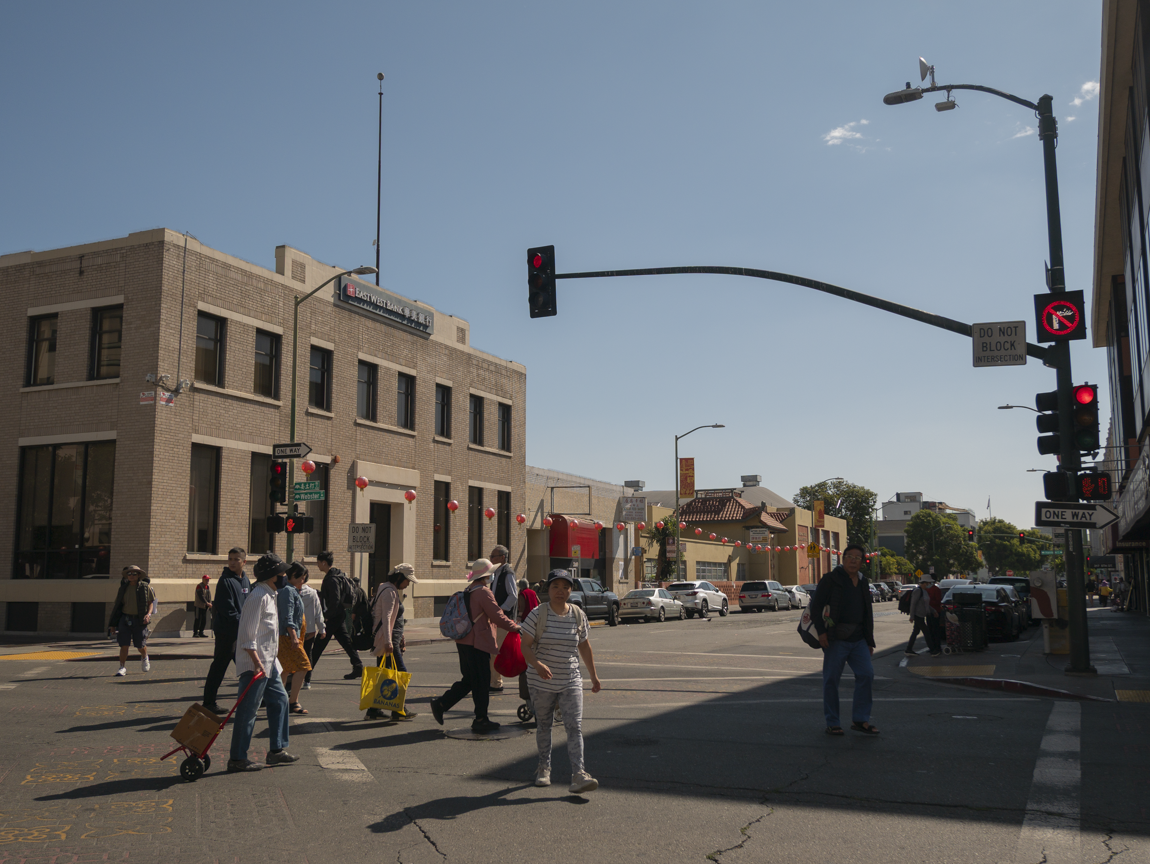

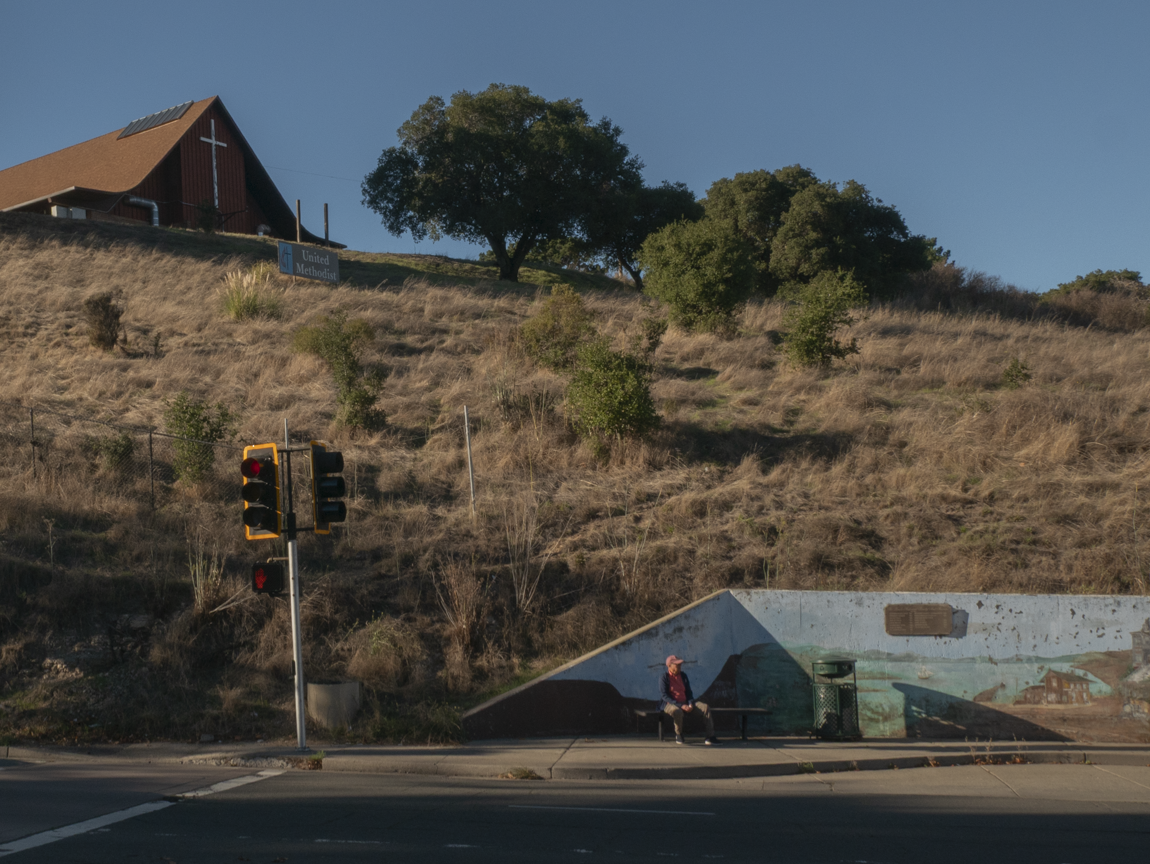
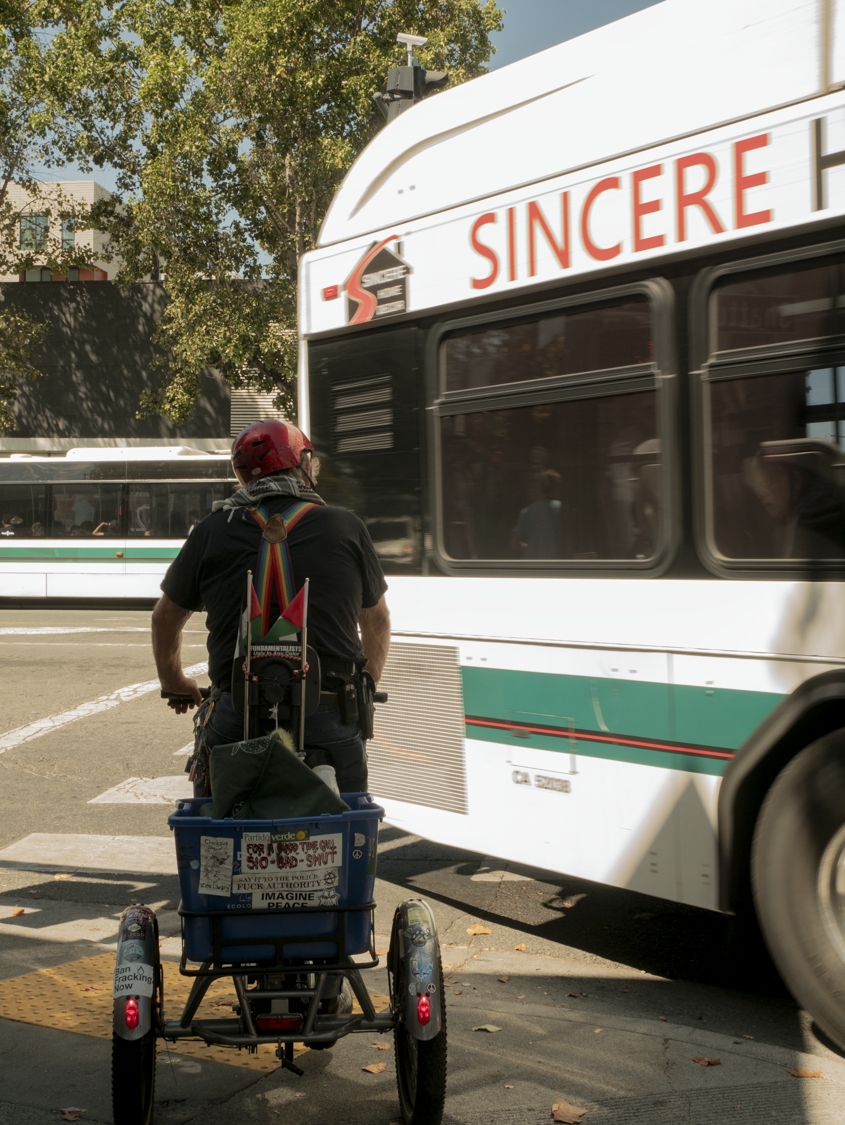
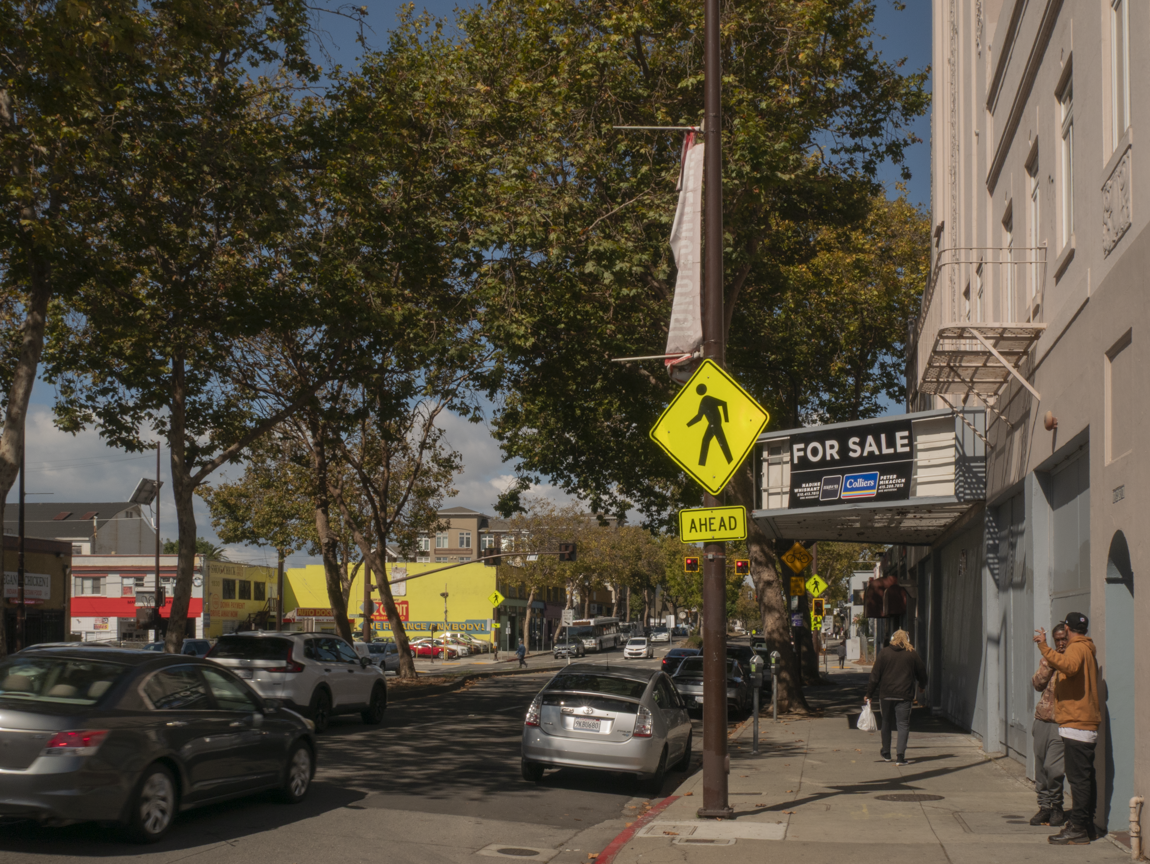
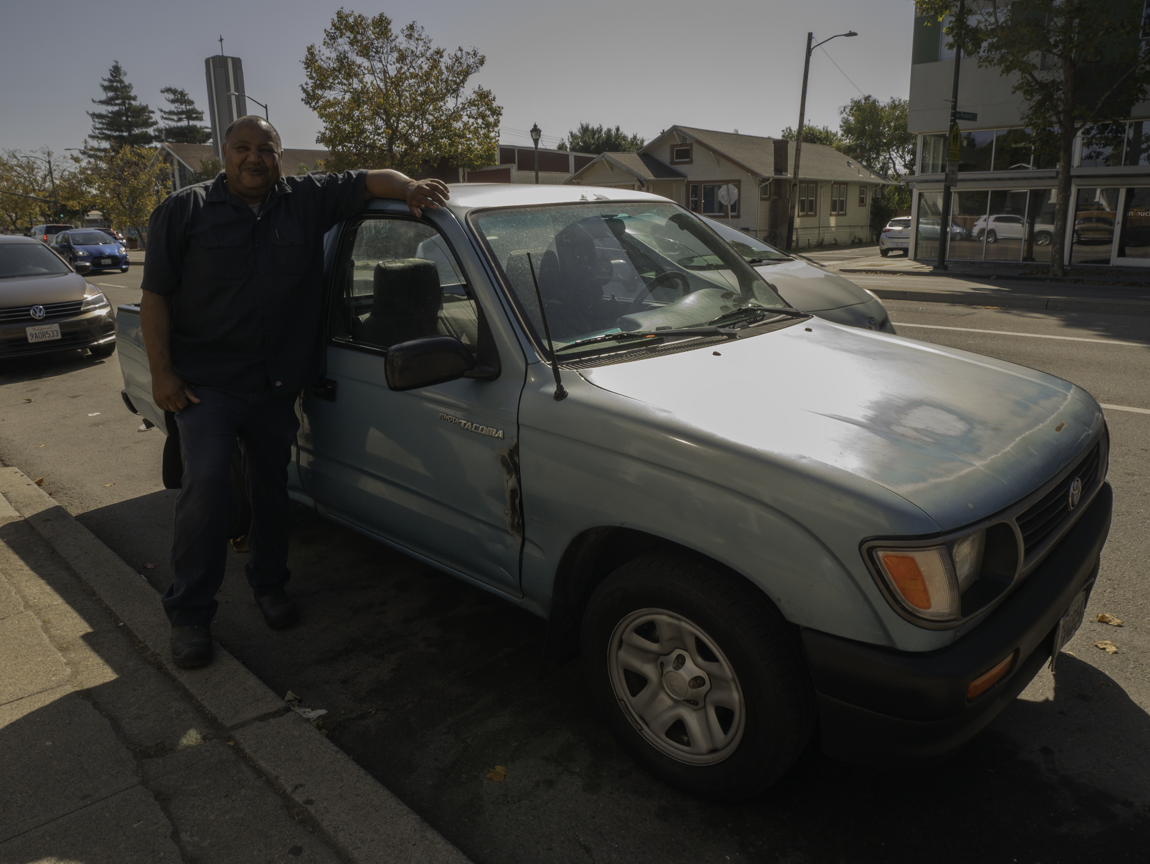
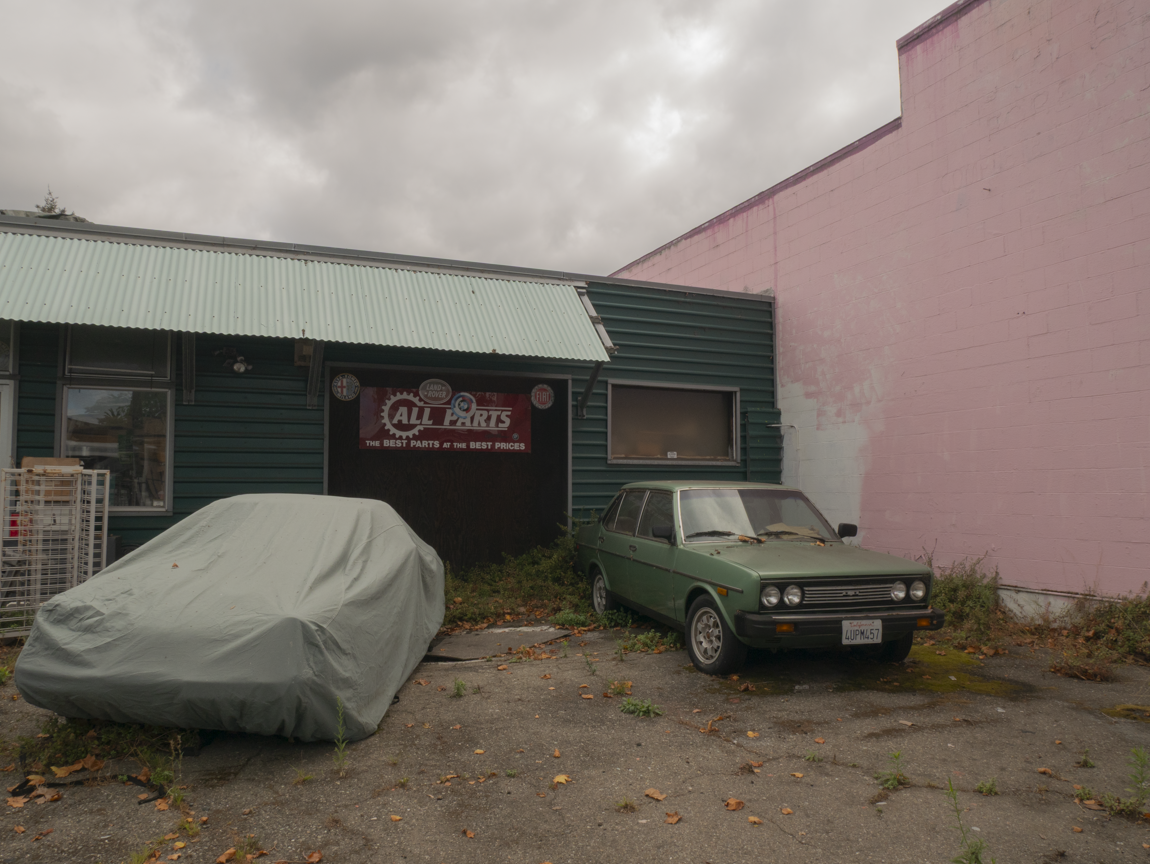
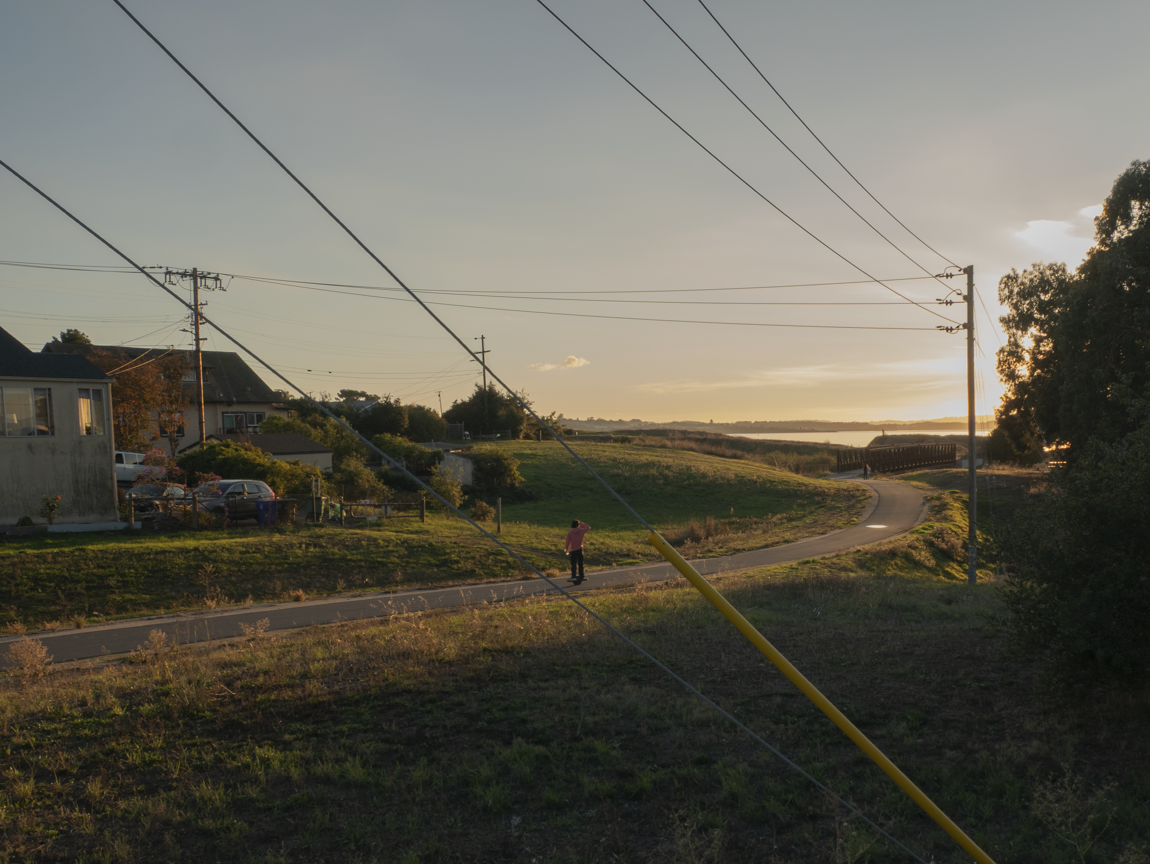
Walking San Pablo Avenue made the car-dependency of the East Bay Area outside of major city centers graphically apparent. I thought much about what level of disconnect this condition brings about and how people compensate for this lack between one other. Along portions of San Pablo where the streets grew wider, I observed to whom space is allotted; how much space cars are allowed to take up compared to pedestrians and what impact this has on one’s experiences depending on your mode of travel. I grew an interest in differing notions of temporality as it’s been a recurring theme in my coursework this semester. I was introduced to Doreen Massey in this class and have been enlightened by her ideas on socio-spatial relations. She writes in Space, Place, and Gender, “Much of life for many people, even in the heart of the First World, still consists of waiting in a bus shelter with your shopping for a bus that never comes.” Time’s perceived value in western rationality originates from how much work you can get done in a certain amount of minutes. When telling people about how I’m taking a class that runs from morning to evening, I am always met with shock and some distress. This I understand, I’d likely react in a similar way, but even when I explain it, their reaction still reads to me as, “why would you do that?” Even in the face of early awakenings and rushing to get to our meeting spot on time, I’ve tried to adapt to thinking from another temporal conception that I learned about–coming from the Akamba people in Kenya and other ethnic groups in Africa–is time being created through experience which deems it incapable of being lost or wasted.
There were many moments along San Pablo I was reminded of home, especially in Richmond. It reminded me a lot of Salinas, where I was born and went to community college. A significant common factor is the two city’s reputations as crime hubs that are also facing recent waves of gentrification, at different levels but nonetheless, and that has an active body of community organizers. On our walks, I felt a constant awareness of our group’s positionality entering spaces as outsiders and for more often than not being welcomed in. I felt more comfortable approaching people I saw something in to identify with and just the same in places I felt a feeling resembling home in.
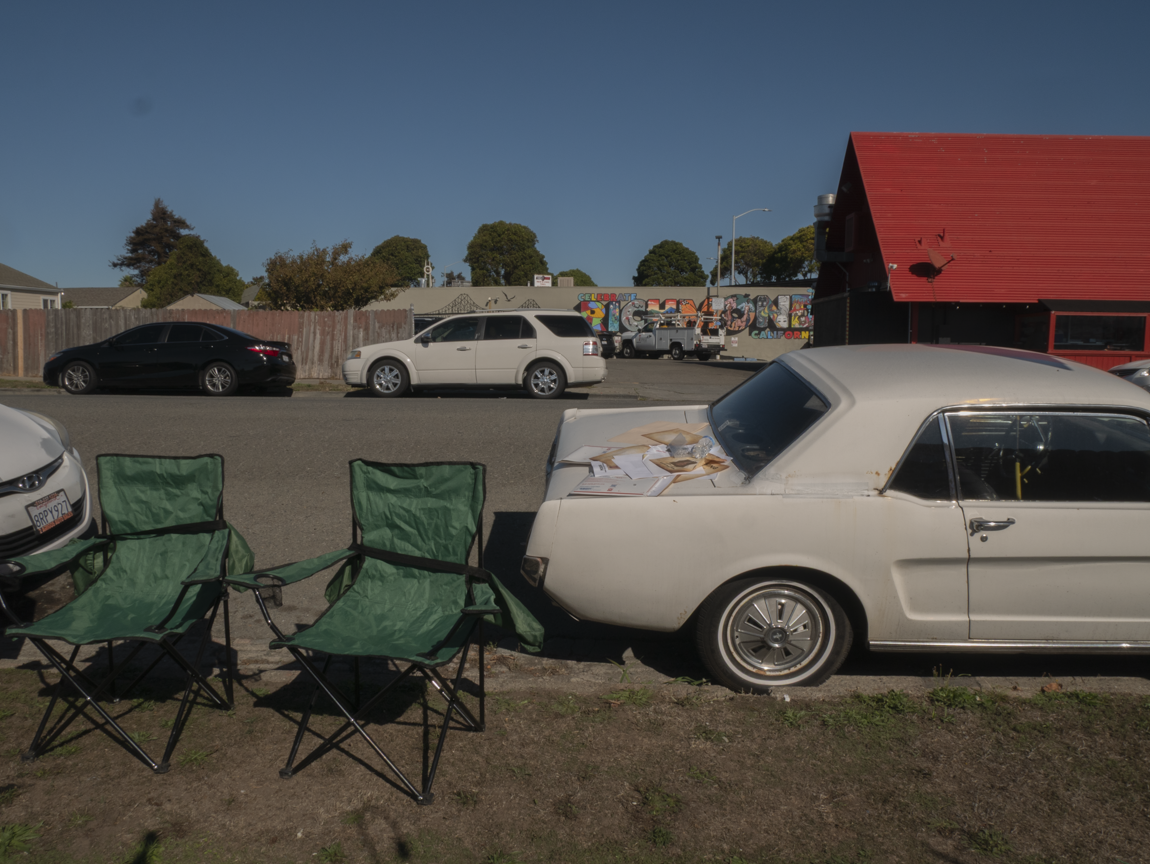
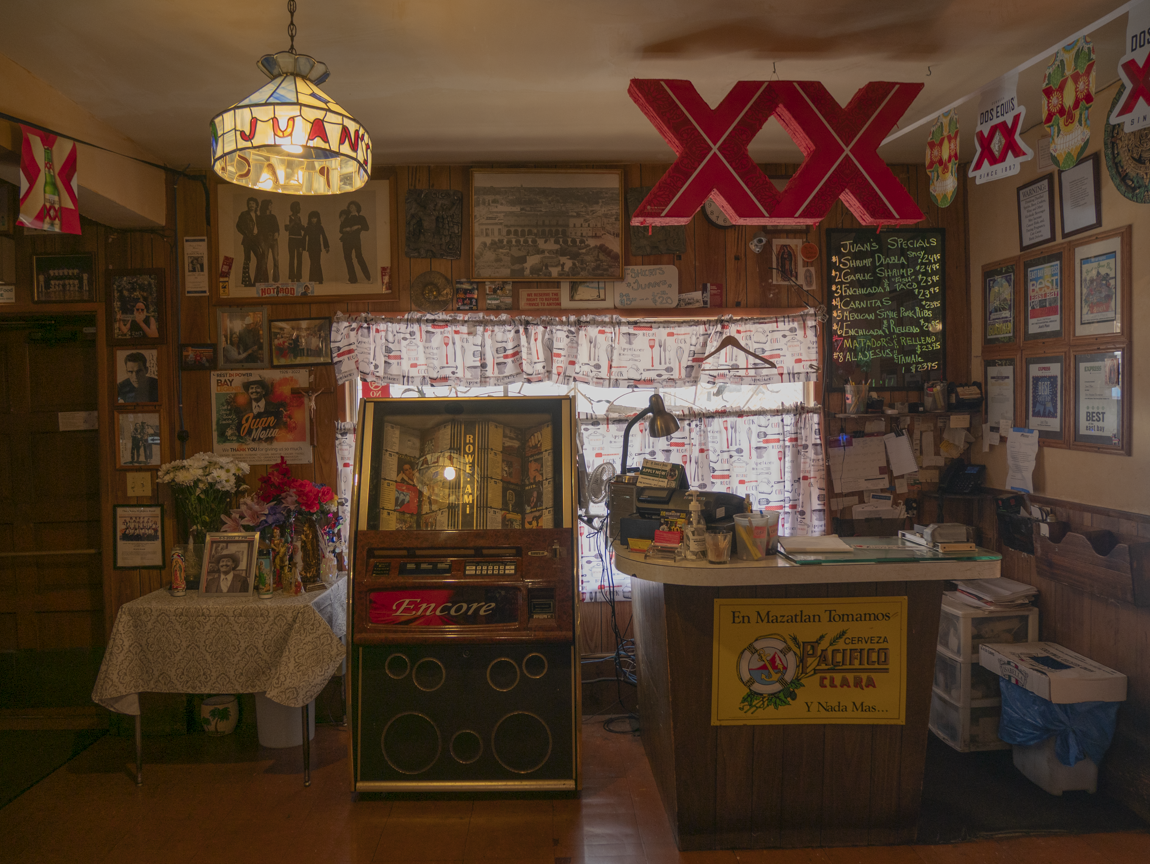
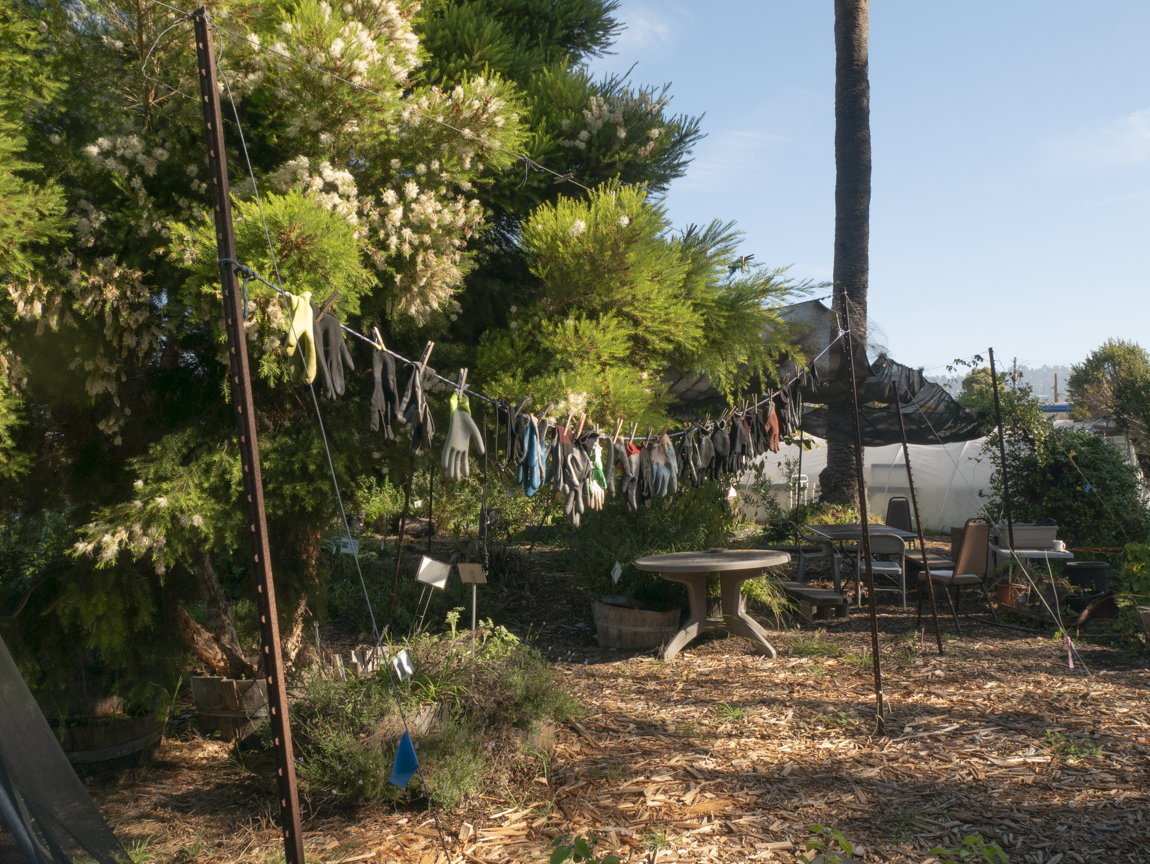
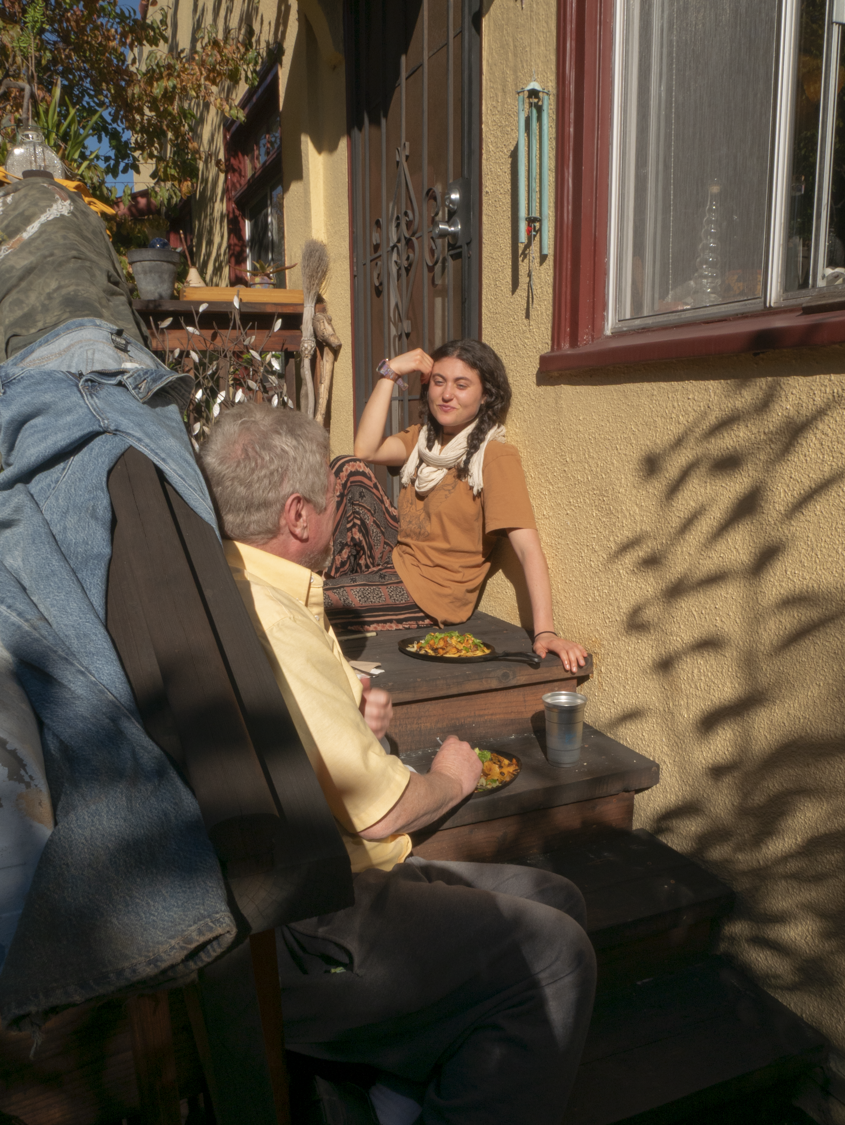
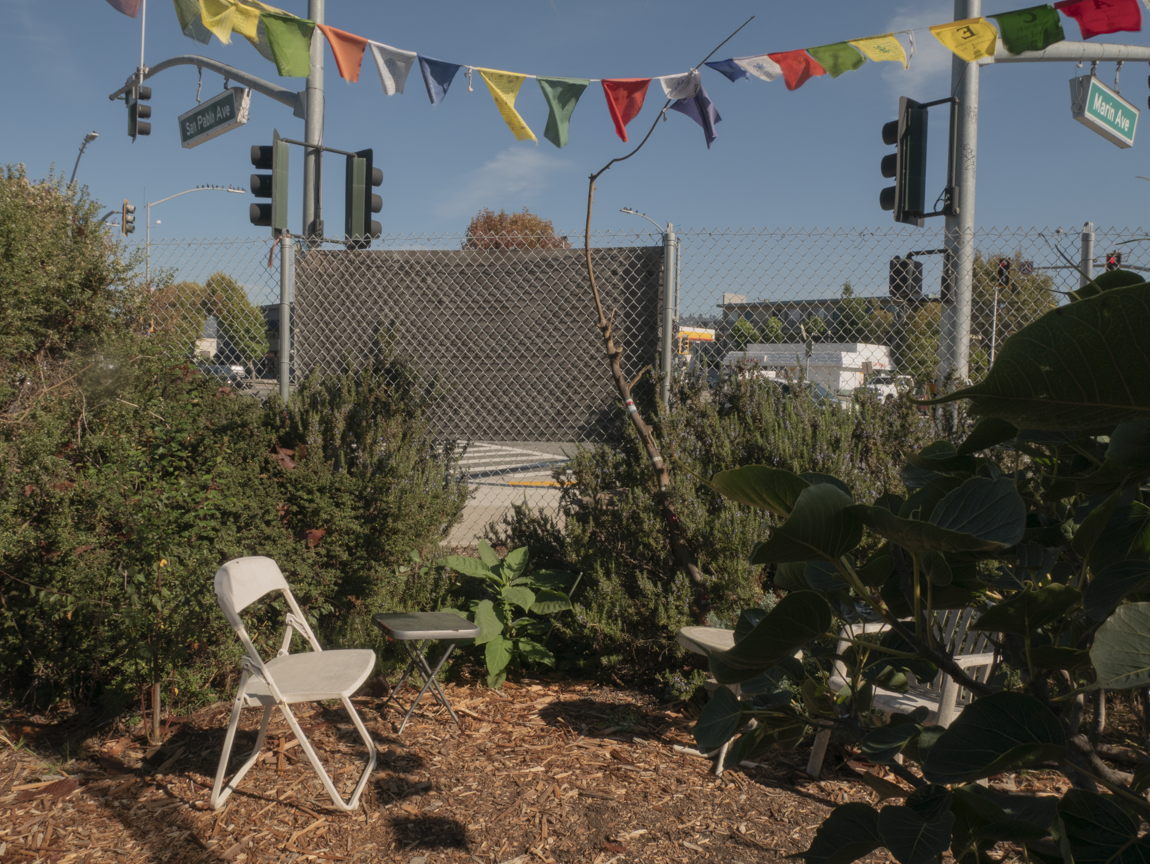
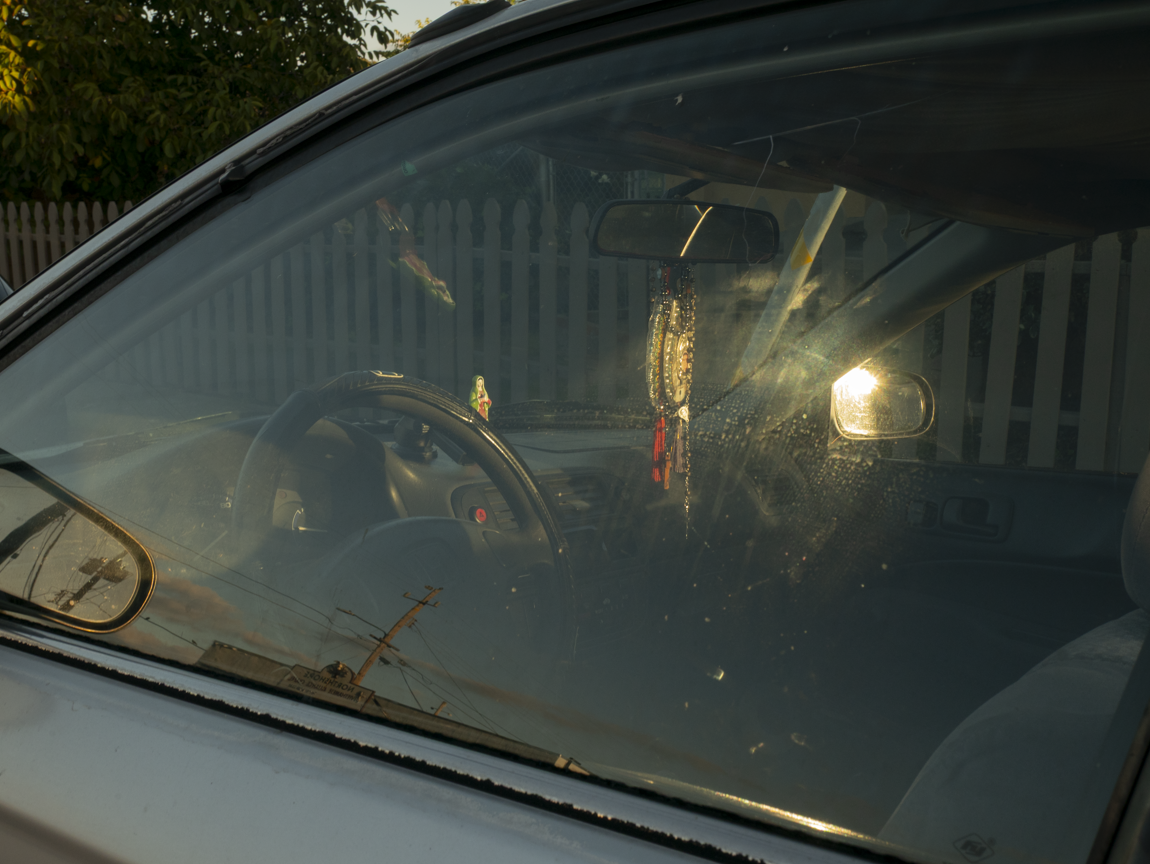
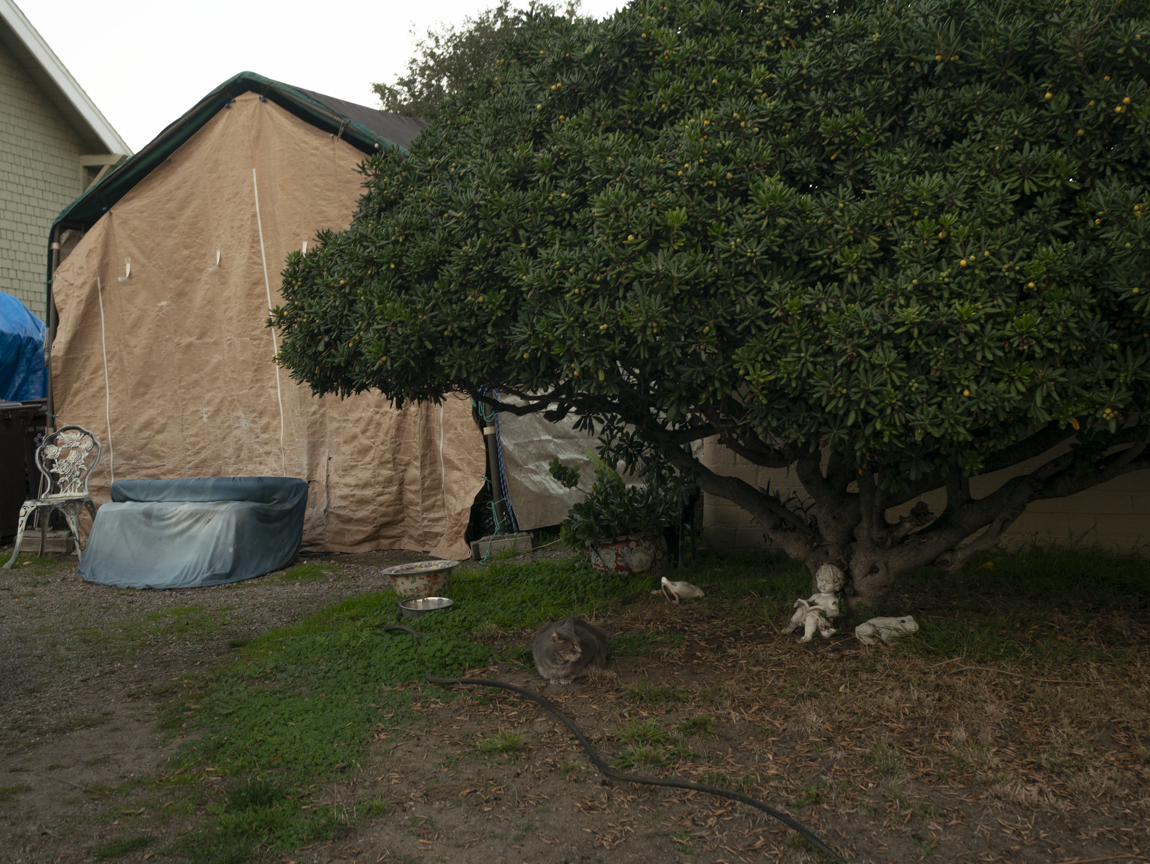
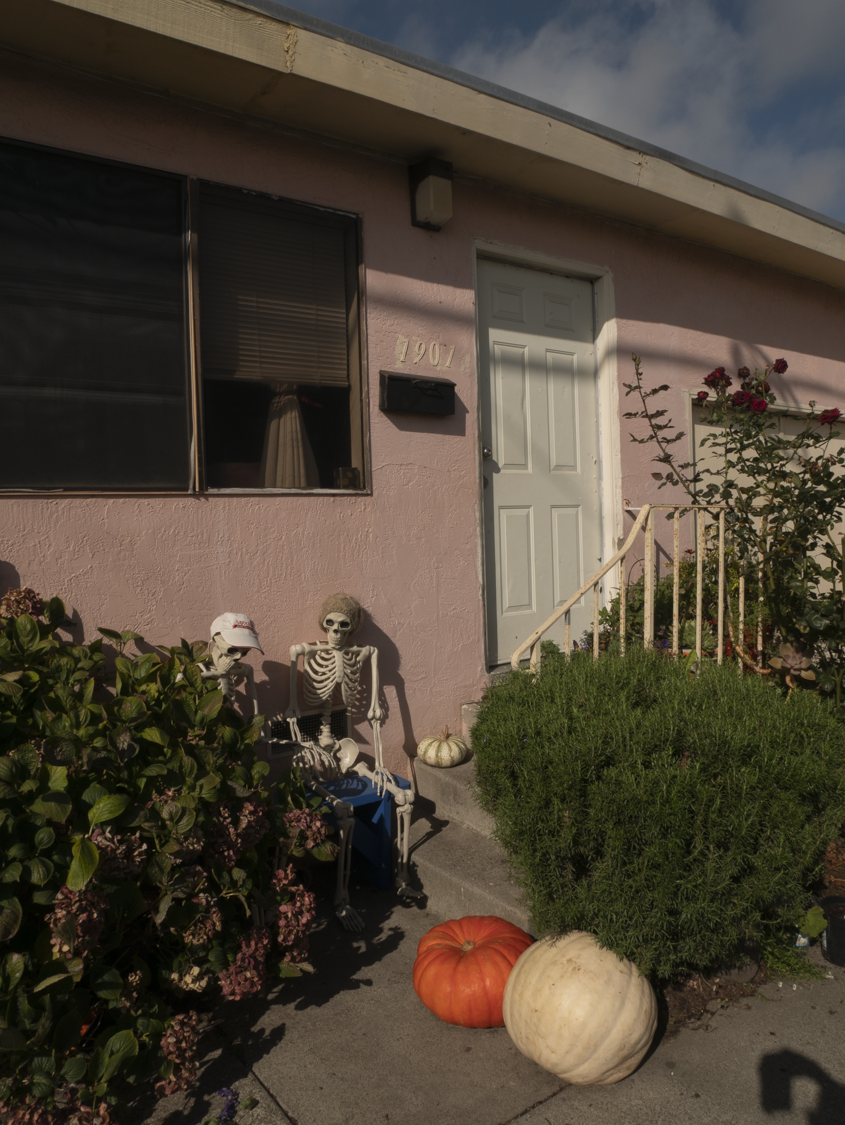
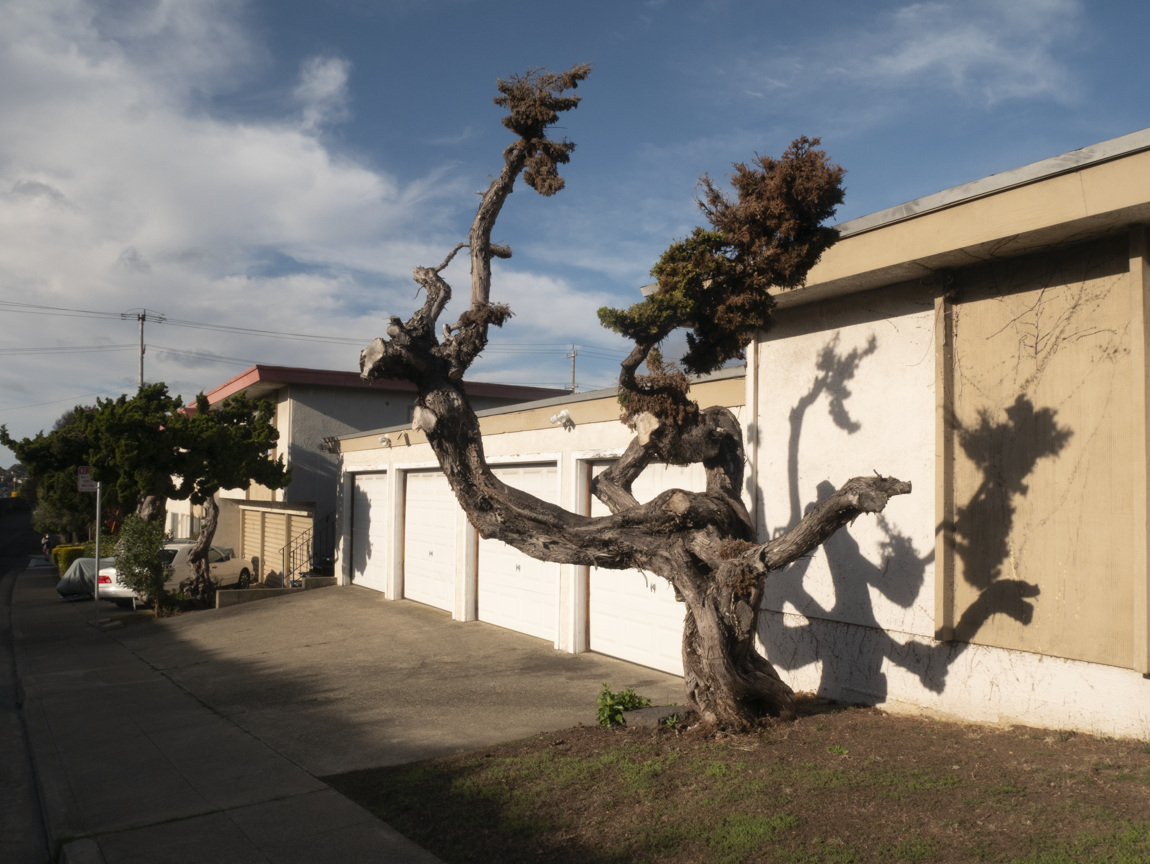
I am especially interested in scenes that depict traces of humanity. Lawn chairs set up on a strip of grass separating the sidewalk from the street, the gloves of farm caretakers hung up on a clothesline, figures of La Virgen de Guadalupe and the Mexican patron saint of immigrants, Toribio Romo on the dashboard of a car. What I hope to convey is absence being an imprint of leftover life. The term leftover can take a bitter connotation, but I use it to say that these are places to return to again and again. Considering ideas of home and belonging, I set out to make images that feel intimate and undefended. I find that photos with interesting light-shadow relationships and the variation in lighting of my photos as a collection communicate this especially well.
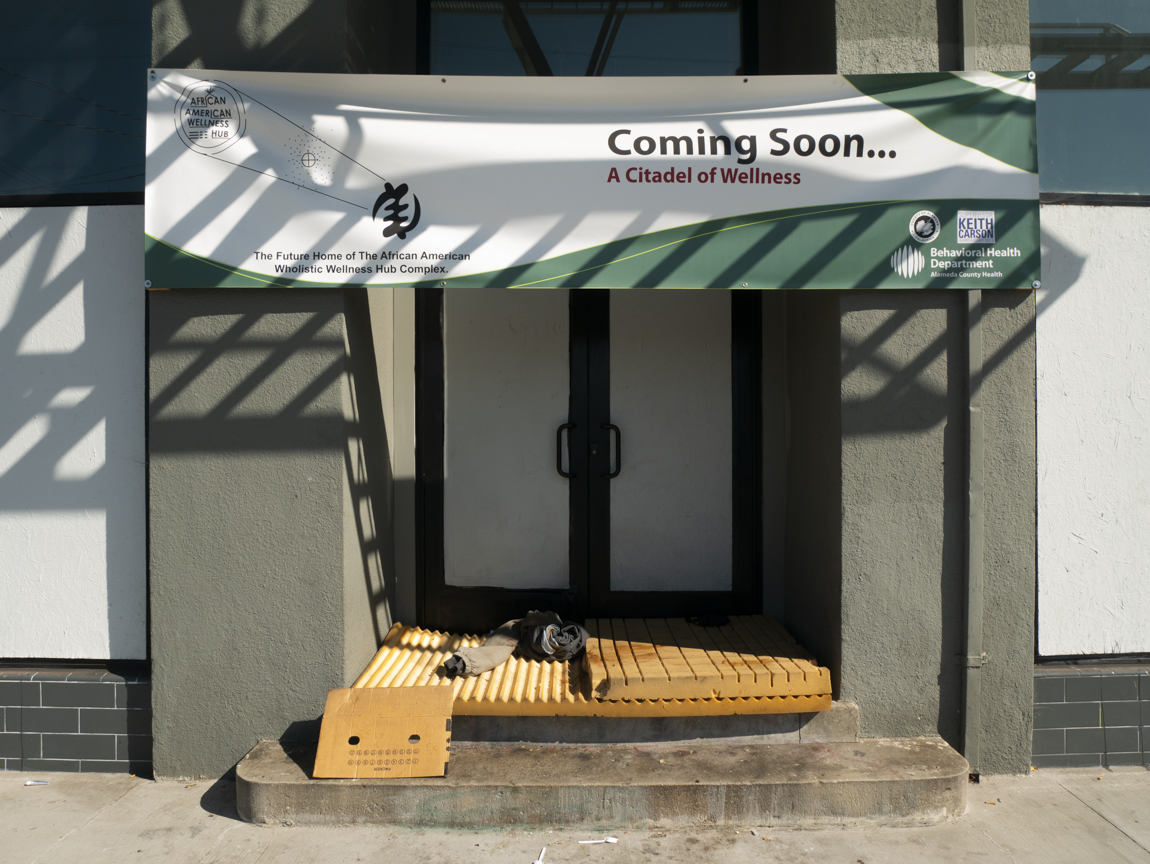
I gathered much from Paccarik Orue’s project centered on Richmond: There Is Nothing Beautiful Around Here. What Orue says about coexistence of realities lended me perspective on different ways to think about human-time/space relationships. Sorrow and beauty, adversity and vibrance, are all here. Their respective persistence fluctuates, one can be more potent than the other at times. Photography has a special way of documenting these aspects in an incredibly blatant manner. Along Martin Luther King Jr. Way in Oakland, I noticed a business front with a banner signaling the building as a soon-to-be new location of the African-American Wholistic Wellness Hub Complex. Right in front of the door was a large foam pad and a jacket presumably placed there by an unhoused person seeking a good night’s rest. I found this incongruity quite jarring to see on explicit display like this, so I felt it was important to include. According to the City of Oakland’s 2017 Downtown Disparity Analysis, 68% of the city’s unhoused population is Black/African-American despite making up just 26% of the general population–in stark contrast to white people being 15% and 39%. Regardless of the identity of the person who set up on these steps, it is evident that these resources are desperately needed.
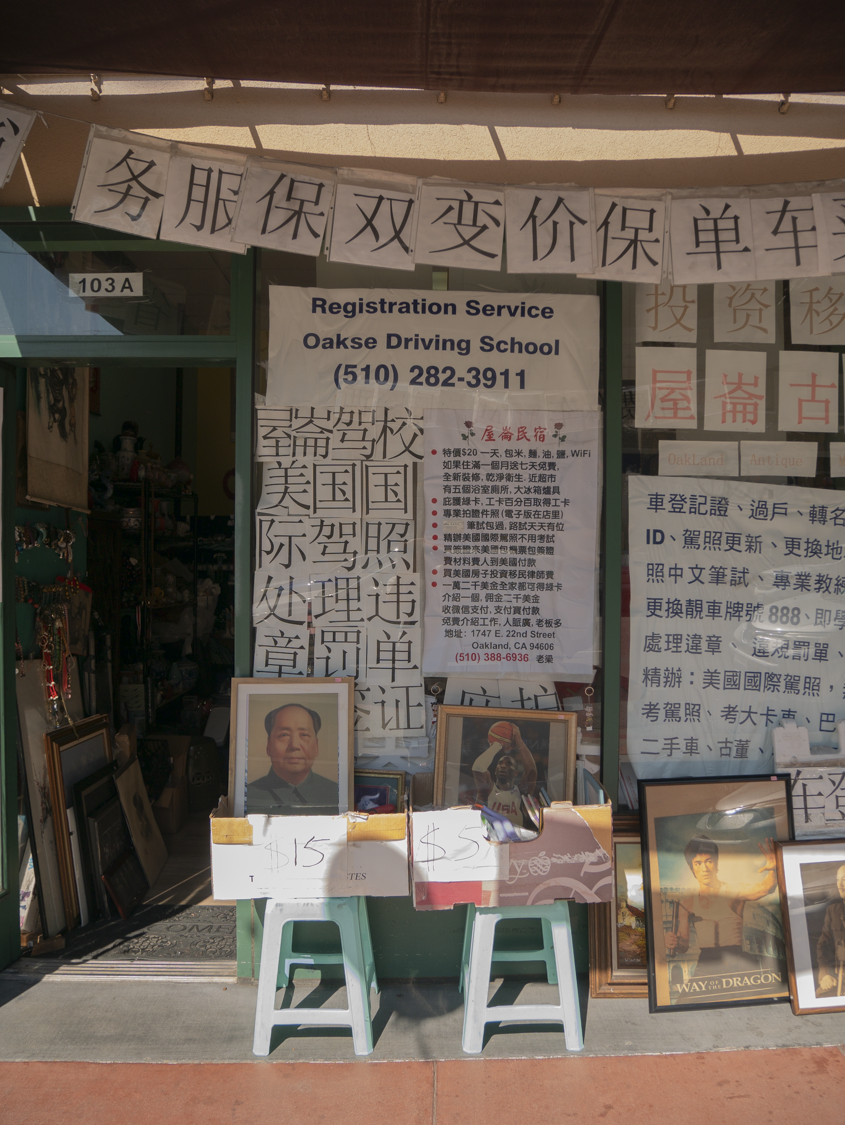
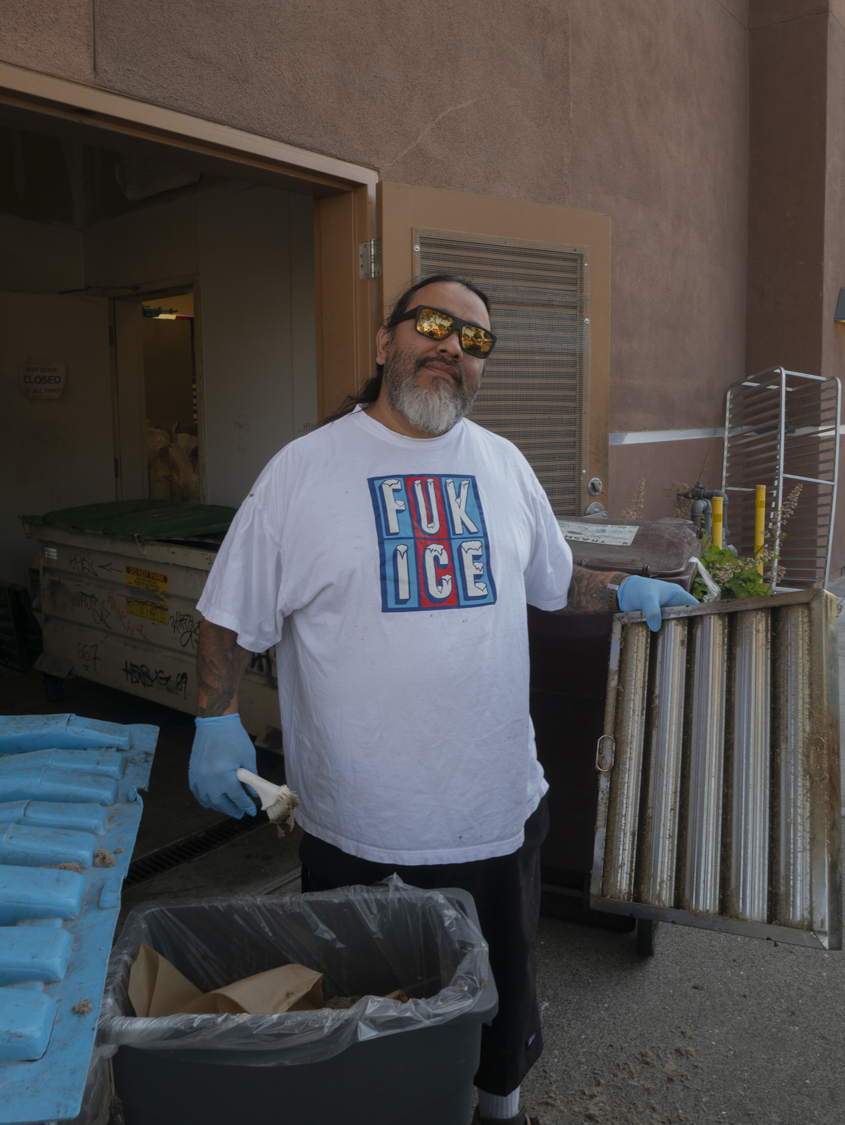
To give background on the title of my project, I used the camera feature on the Google Translate app to translate the text on a street sign written in Mandarin in one of my photos from Chinatown. My phone had difficulty reading it so it was flipping through a plethora of different attempted translations, one of them being “discount on fate.” I found it very amusing to learn that the actual translation is “Webster Street” and I just hadn’t realized that the sign below this one indicated the same thing but in English. Regardless, Discount on Fate spoke to me as an image of socioeconomic disparity and the obligations it imposes on people, preventing us from the pursuit of passion. But my experiences walking have proven to me that people always find a way in spite of these imperatives. The morning we arrived in Emeryville, I approached a man cleaning a machine part behind Arizmendi Bakery. What caught my attention was his shirt reading, “Fuk Ice” in the style of the brand ICEE’s logo. He immediately complimented my cat DJ shirt and I complimented his. He then informed me that it was his own design and introduced himself by his artist name, Chicano Eyes. I wanted to know more about his work, so he pointed me over to a piece he did on the building across the parking lot that was soon going to be painted over due to new ownership of the building.
Good Bones, a poem by Maggie Smith has rang in my mind through the duration of this semester during our walks. Particularly the final line, “This place could be beautiful, right? You could make this place beautiful.” The making of this project has all been an attempt to refuse a rejection of the world by instead actively embracing it and all of its parts. Additionally, to reconstruct popular politics of encounter via this medium that can feel extractive and instead go forth in the spirit of curiosity and intentional connection. I have progressed to implement these thoughts and practices into my life through meaningful engagement with people and with the environment. To relate locally while thinking globally. In a practical sense, I’ve learned much more about my camera’s manual settings. And even more so, I have granted a deeper understanding of photography as a means of documenting humanity, absence, injustice, love, and conveying stories through stills of that which lives.