Amber Moments by Gracie Dai
Walking along San Pablo Avenue has been an enriching experience for me as the path tells a story that is both deeply rooted and constantly evolving – a story shaped by the presence and perseverance of immigrant communities who have built lives along its 23-mile stretch. When people view my photos, I want them to understand that San Pablo is more than a road connecting multiple cities; it is a cultural corridor shaped by countless individuals whose daily routines, businesses, and interactions form the avenue’s heartbeat. Many of these residents remain underrepresented in public conversations or civic decision-making, yet their contributions are unmistakable in the physical and cultural landscape of the street.
Through the walks, I became more aware of how the Avenue embodies diversity not through abstract labels but lived, everyday coexistence. Chinese vendors working beside Latin American storeowners in Oakland’s Chinatown, Middle Eastern restaurants next to Vietnamese cafes, and many other mixed markets – each pairing is a small but powerful sign of how communities adapt and thrive by leaning on one another. These relationships reflect the quiet but constant negotiation of belonging that defines immigrant life. The history of the street also shapes the present in ways that are important to acknowledge. As we walked through Southwest Berkeley, I learned that the neighborhoods west of San Pablo were once intentionally zoned for low-income Black workers, a legacy of redlining and discriminatory housing policies. Other immigrant groups along the avenue also faced their own forms of exclusion, whether through limited economic opportunities or stigmatization of their neighborhoods. San Pablo’s modern diversity does not erase these histories; rather, it emerges from them, illustrating how people have reclaimed and redefined spaces that once restricted them.
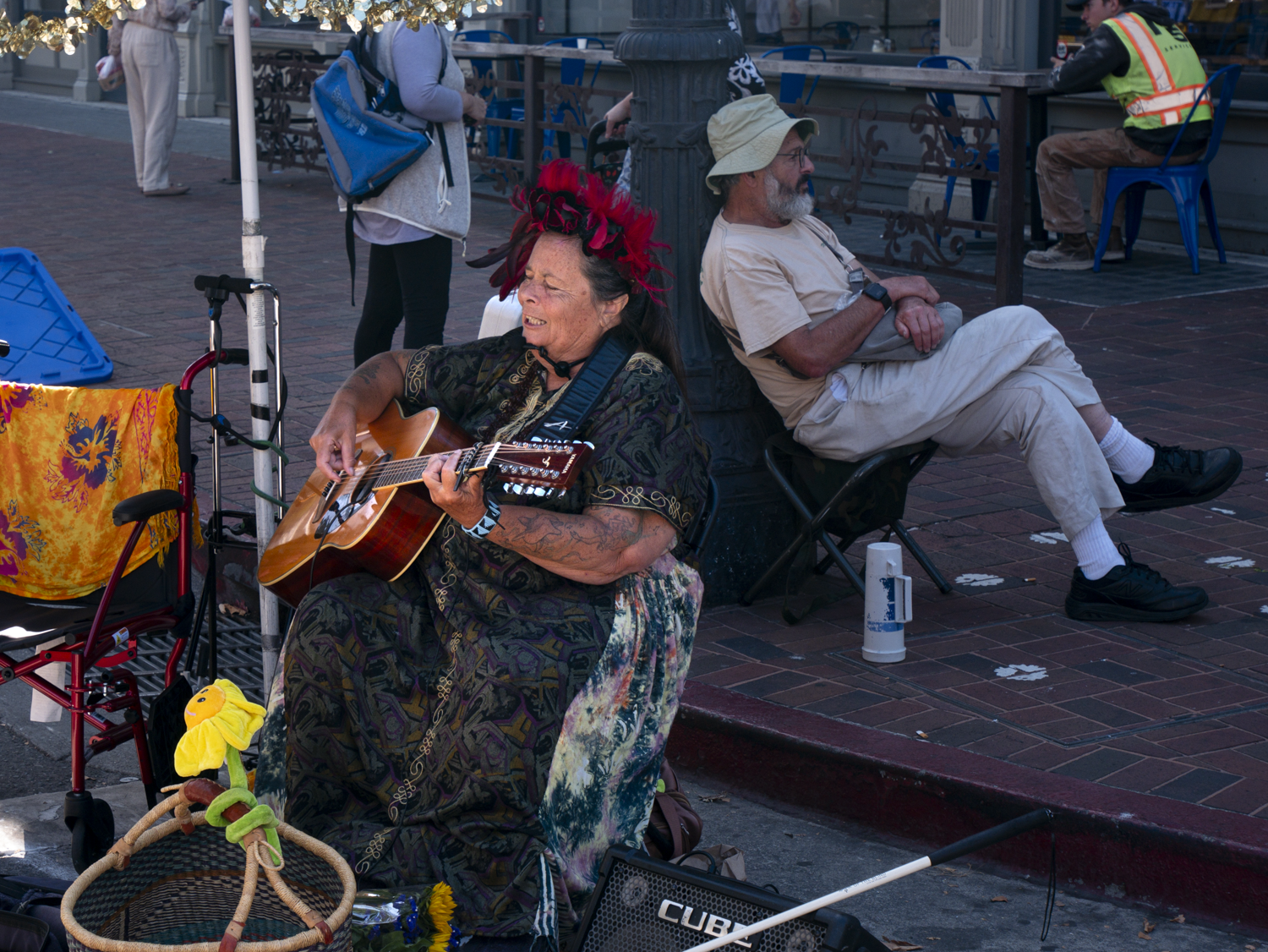
What makes San Pablo particularly special is how it functions simultaneously as an artery and an archive – a living record of cultural layering. As a historic highway, it once carried traffic through the East Bay long before the freeways were built. Today, while it still grapples with its car-oriented past, it is also home to many pedestrian-friendly corners, community events, music venues, and redevelopment projects that attempt to balance growth with preservation. Beyond infrastructure, San Pablo stretches across spiritual worlds: people do not stand alone here. Frequent conversations emerge on 72-bus, region-specific flyers on utility poles…they interact, adapt, and support one another in subtle and profound ways that form the tightly knit social fabric I wanted to capture.
My personal connection to San Pablo grew through the people I spoke with while taking photos. These conversations were what grounded me, helping me move from an outside observer to a participant in the avenue’s rhythms. One moment that remains vivid is my conversation with Moe during the trip to El Cerrito. He shared his spiritual journey with disarming honesty: raised in a Christian household, drawn at one point toward Islam, but ultimately embracing omnism – a belief system that welcomes all religions and people. He explained that his identity as a Latino immigrant meant constantly navigating contradictory expectations, and omnismoffered him a way to reconcile those tensions. His reflections touched me deeply because they echoed my own experience of studying and living in a foreign country since the age of fifteen and struggling to harmonize different parts of myself. Moe’s perspective made me consider what inclusion really means, and how communities like his sustain connection despite economic pressures and ongoing redevelopment. Encounters like his reinforced my love for San Pablo. Each story offered a glimpse into a life shaped by place and time – moments that, once passed, never fully return. Photography became my way of holding them still, like capturing insects in amber: small and delicate, but precious in their accumulation.
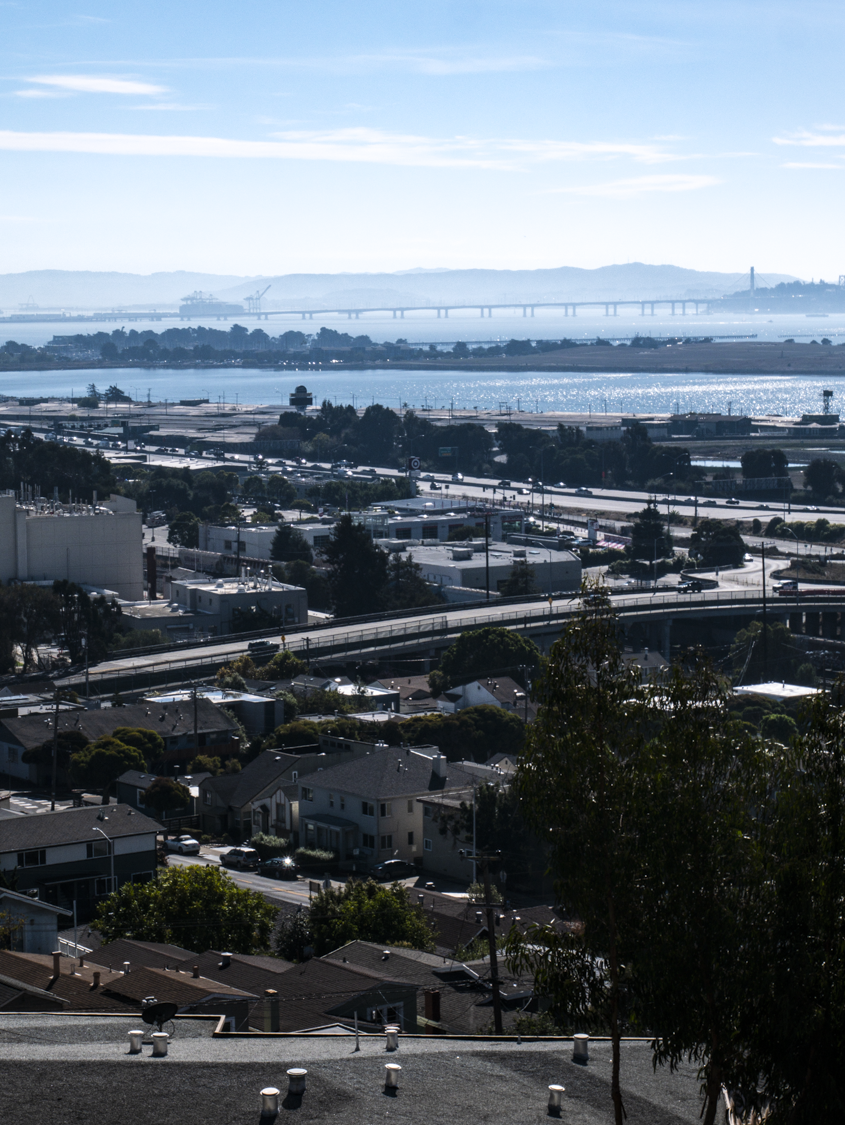
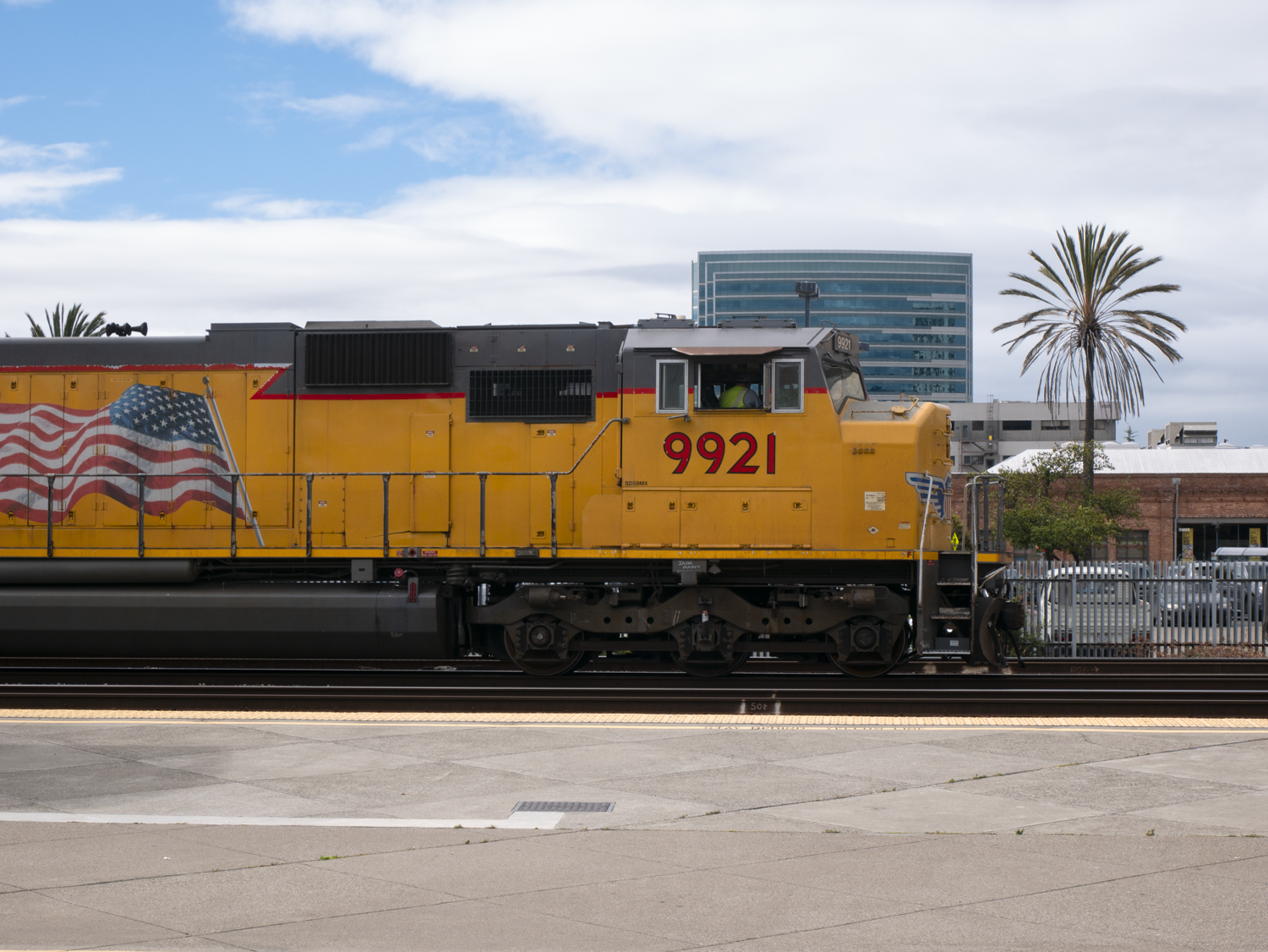
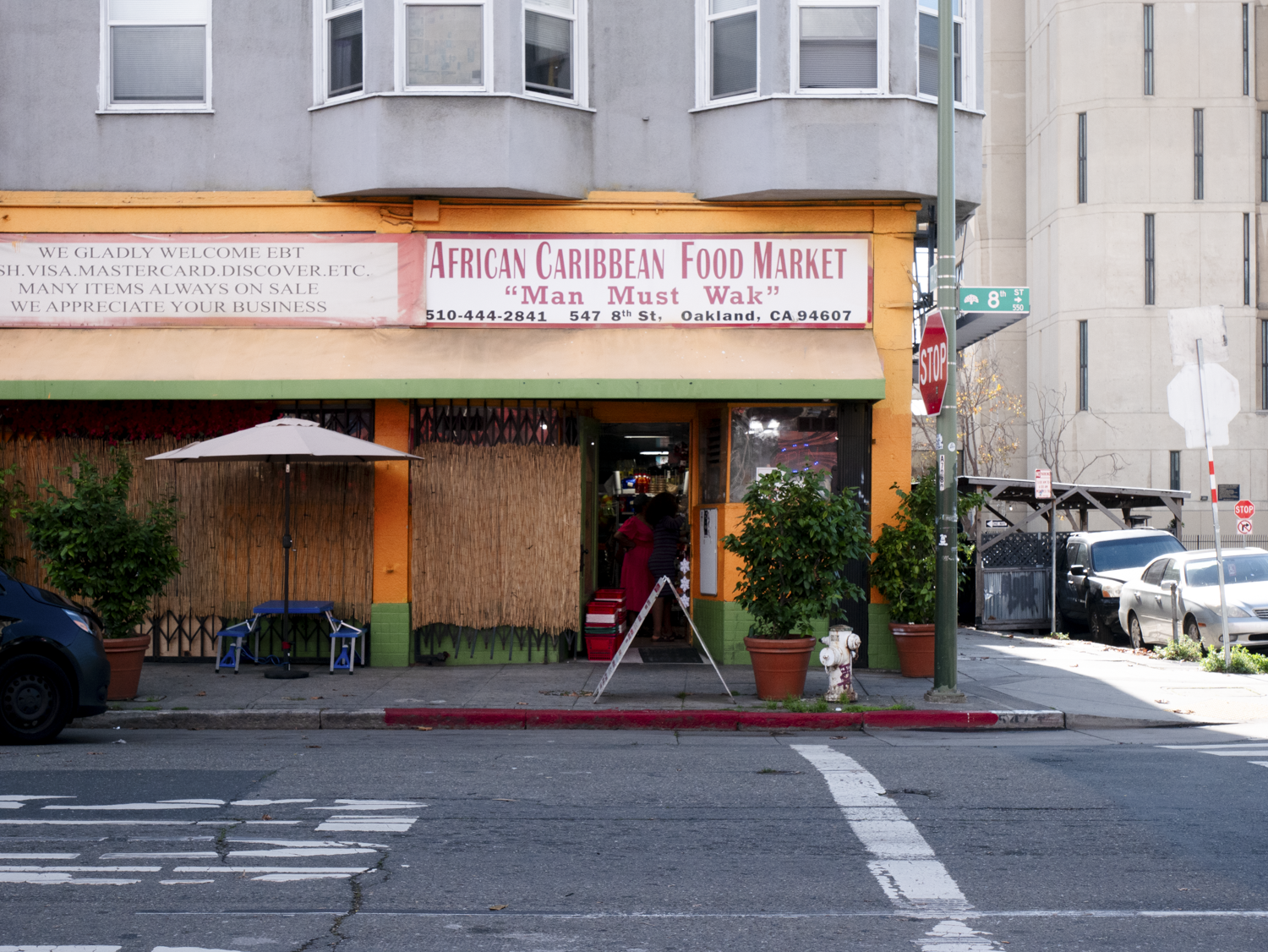
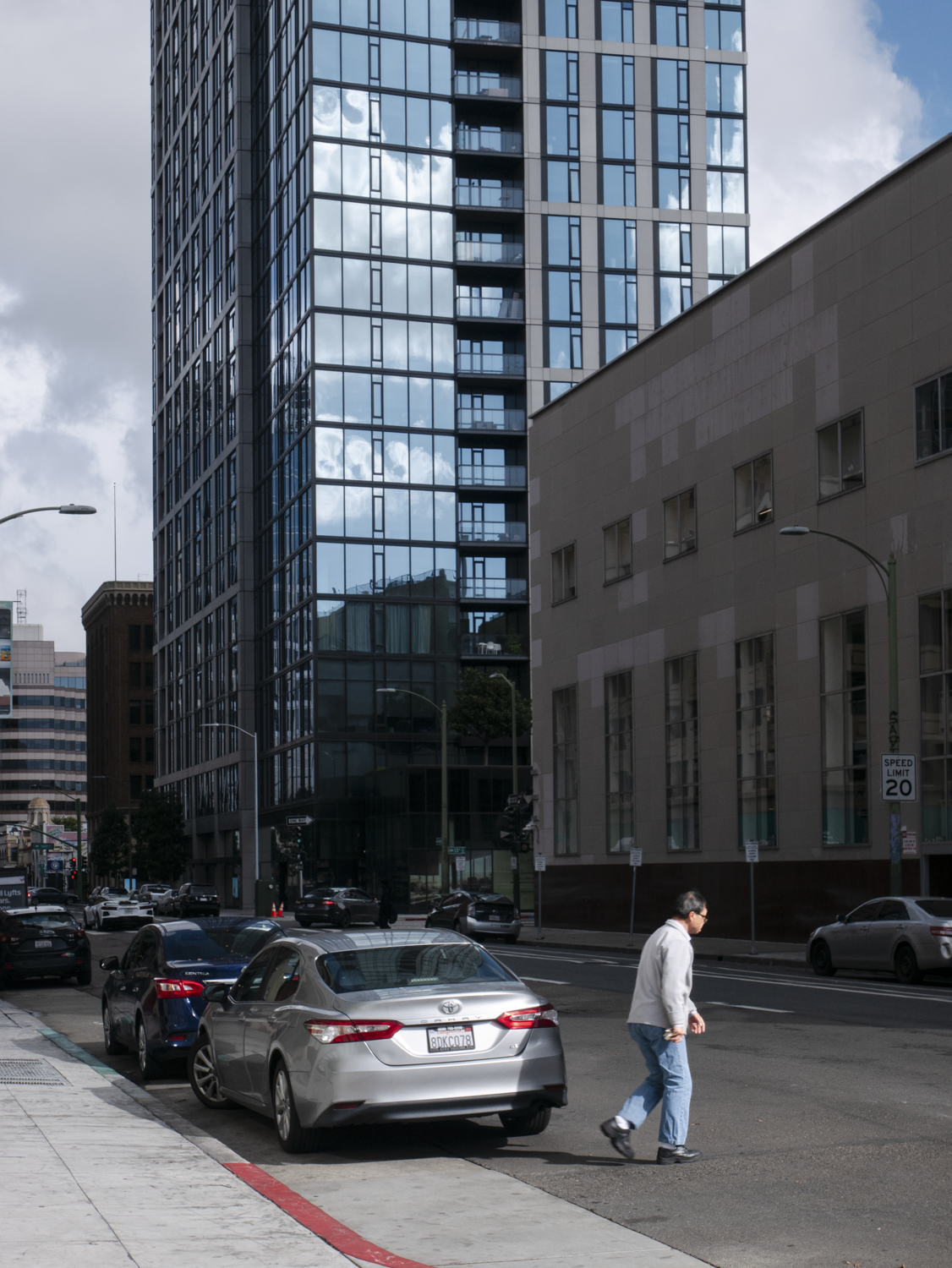
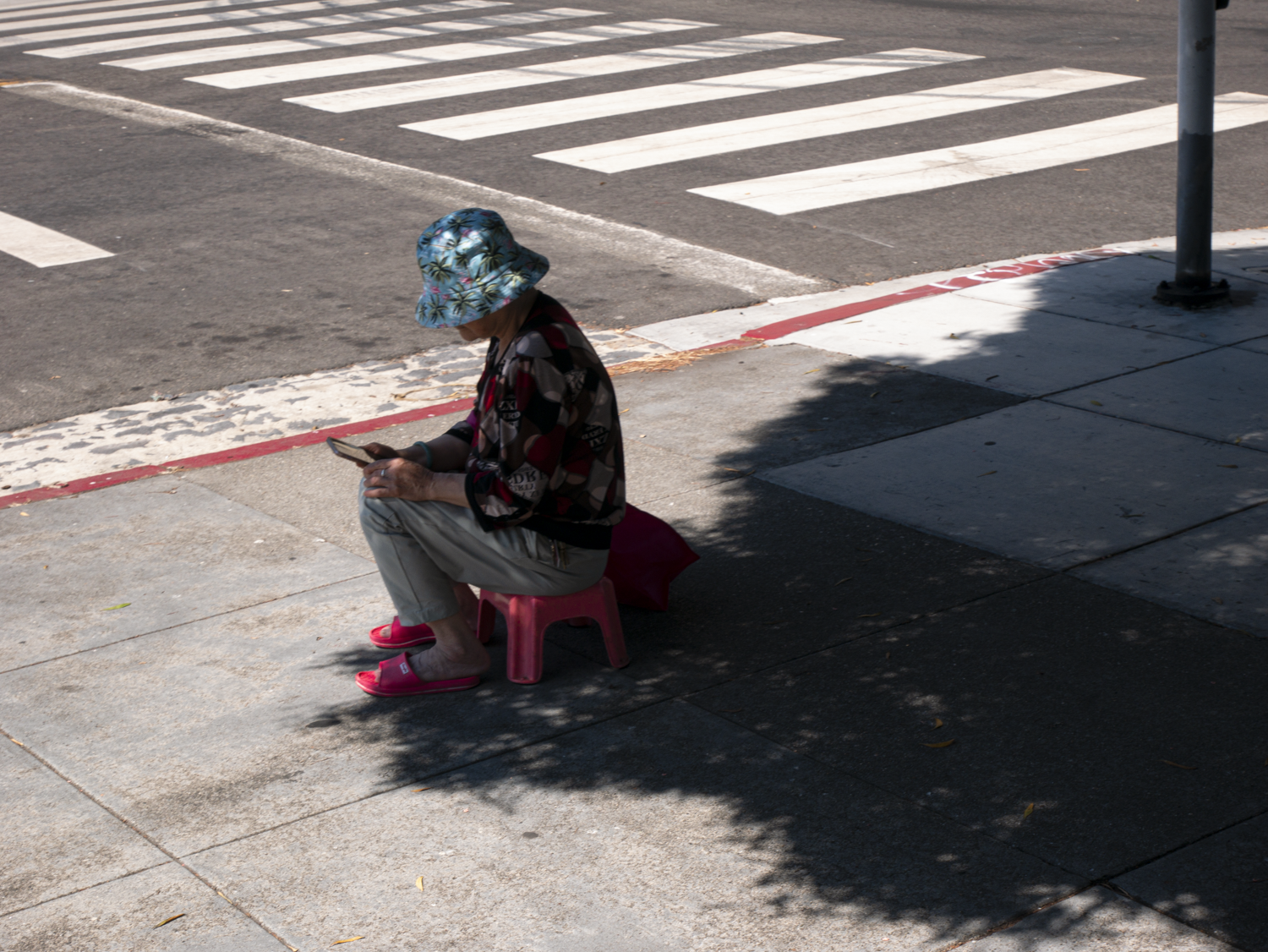
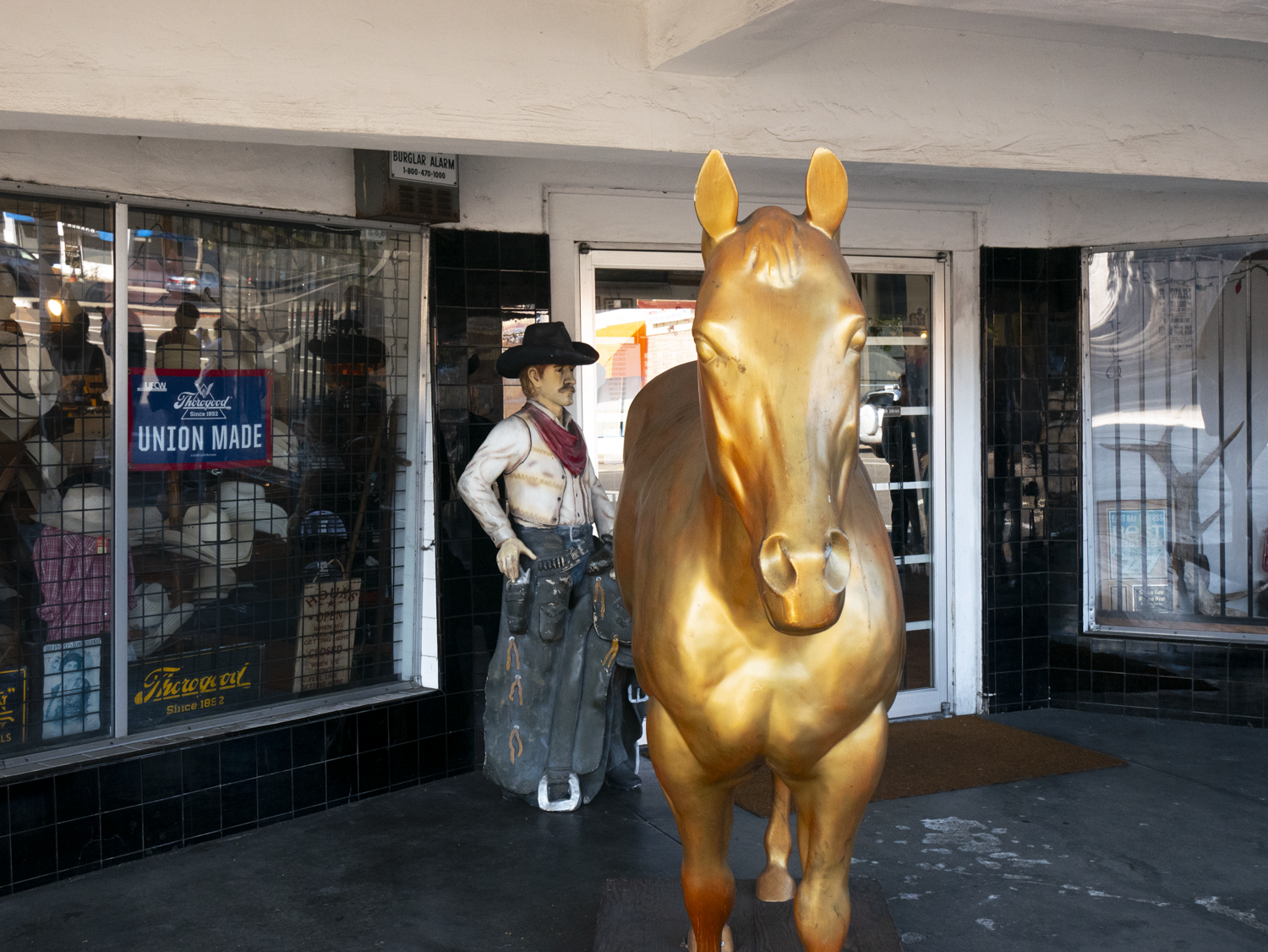
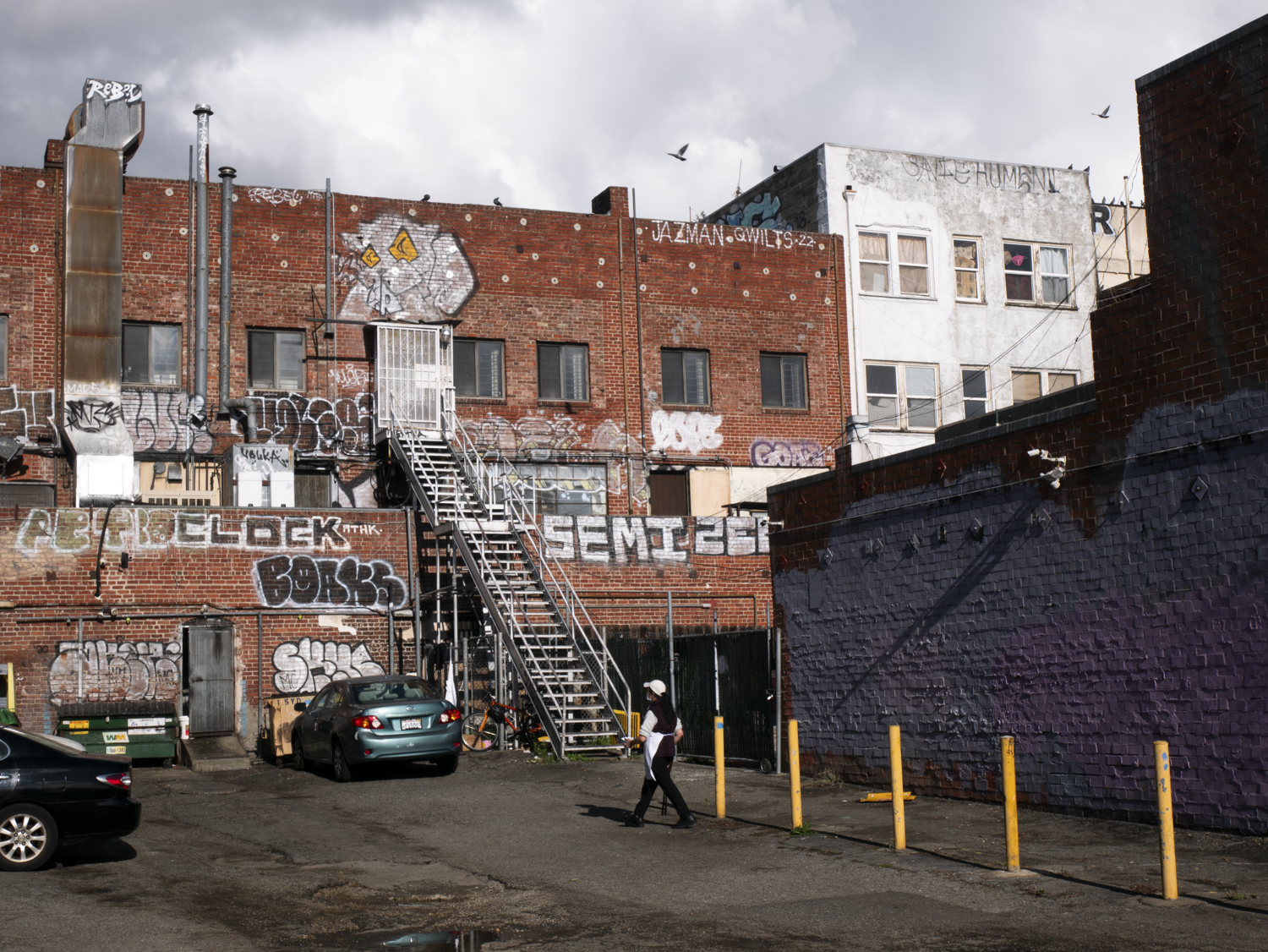
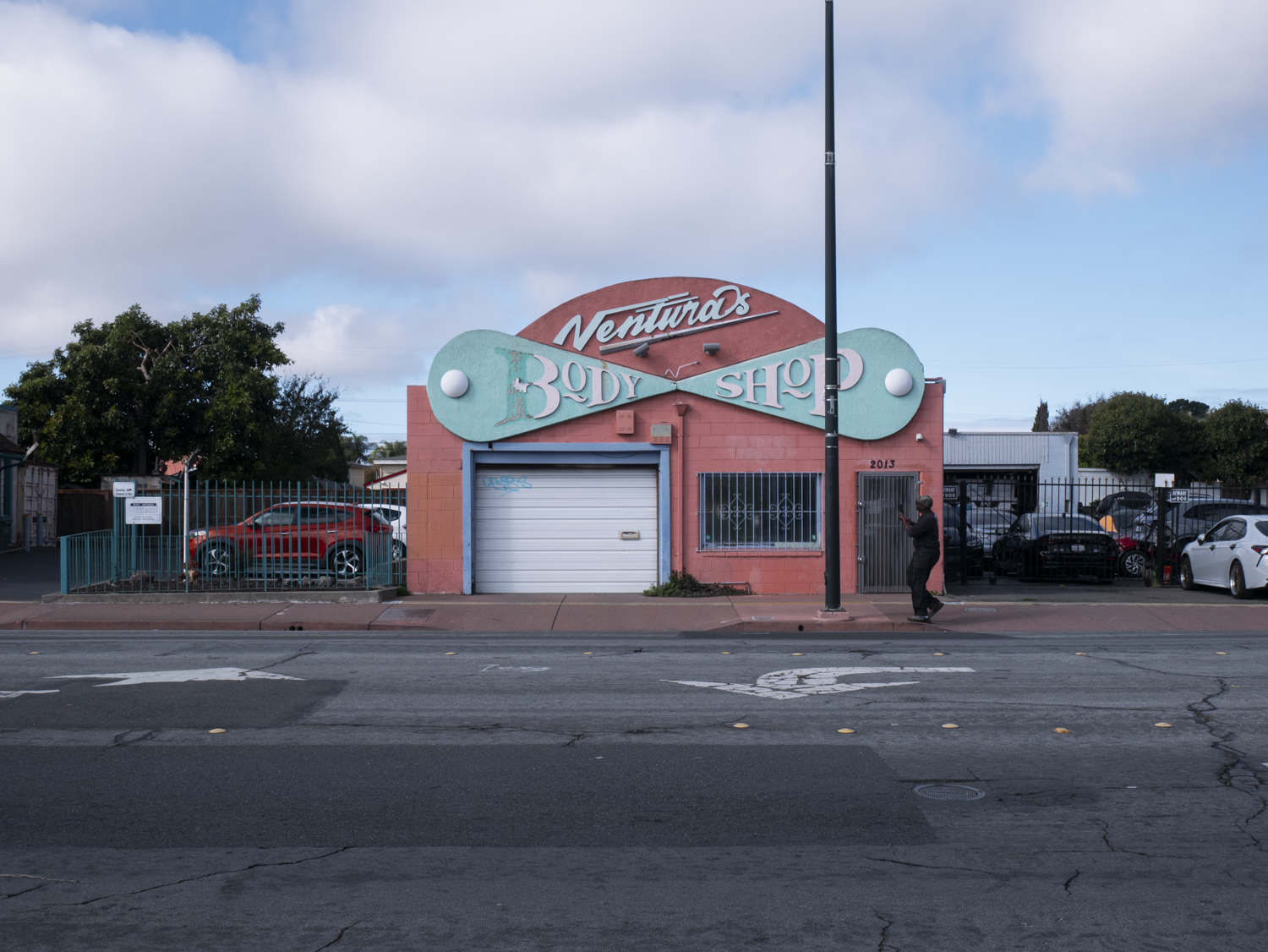
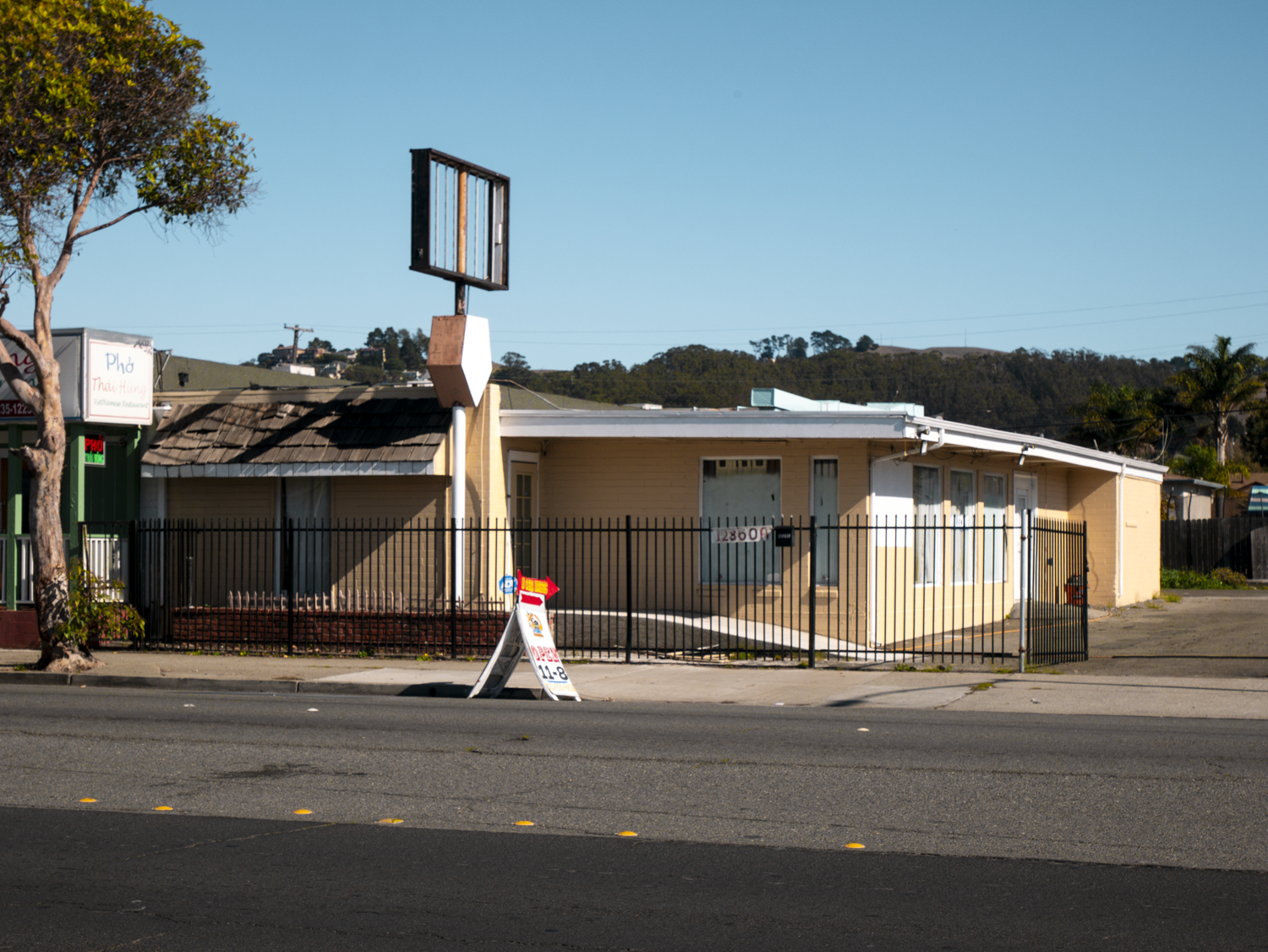
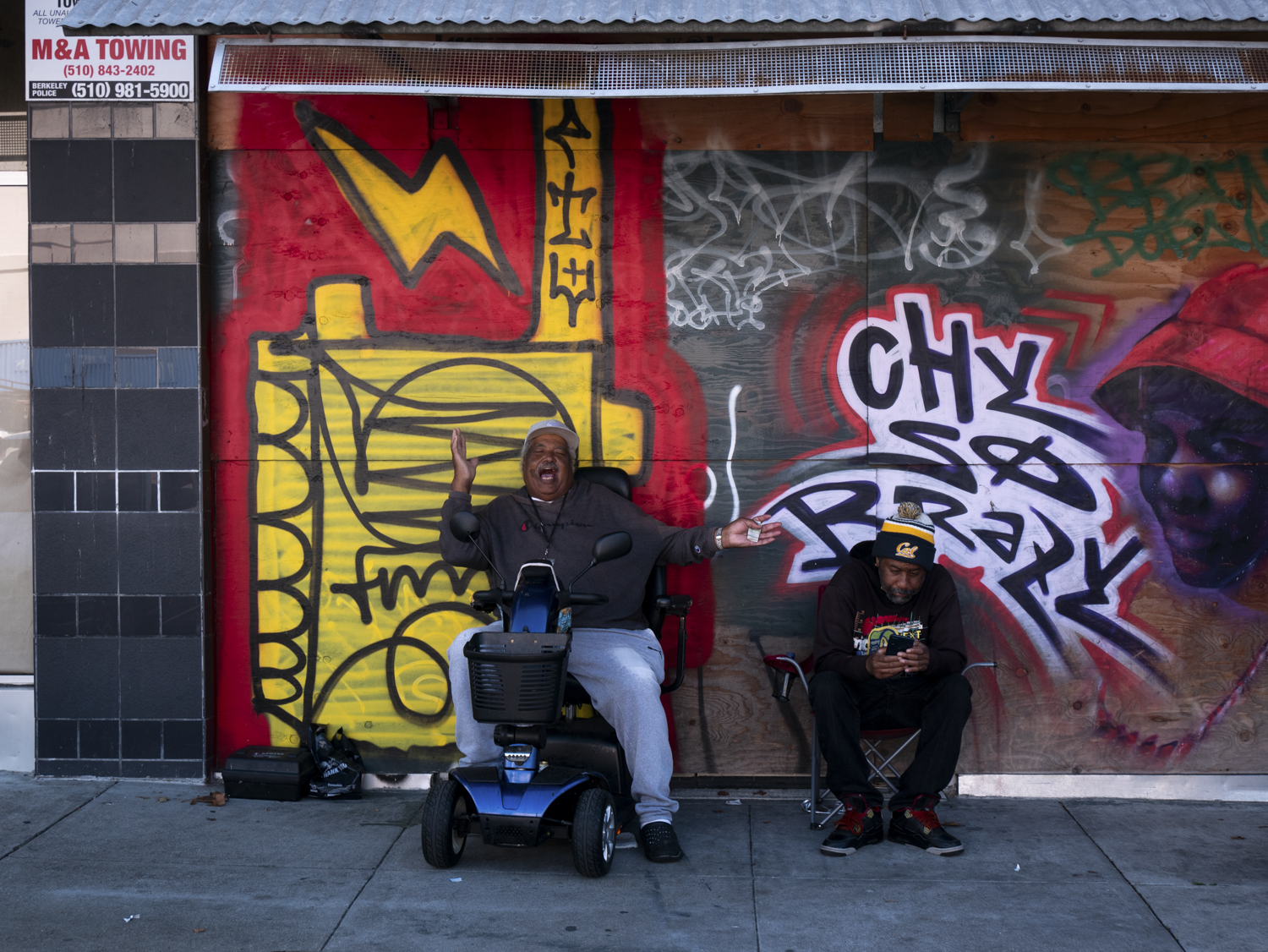
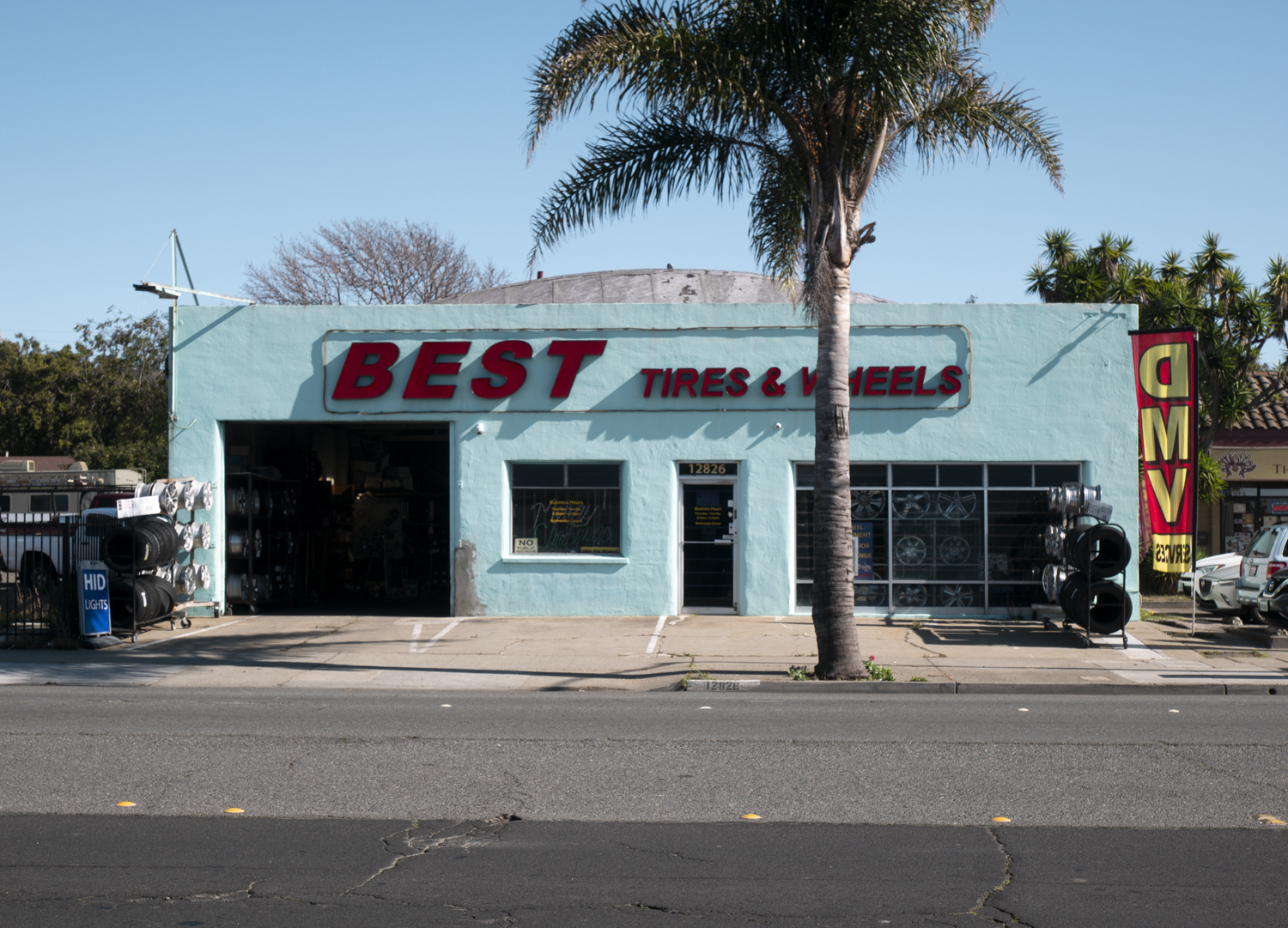
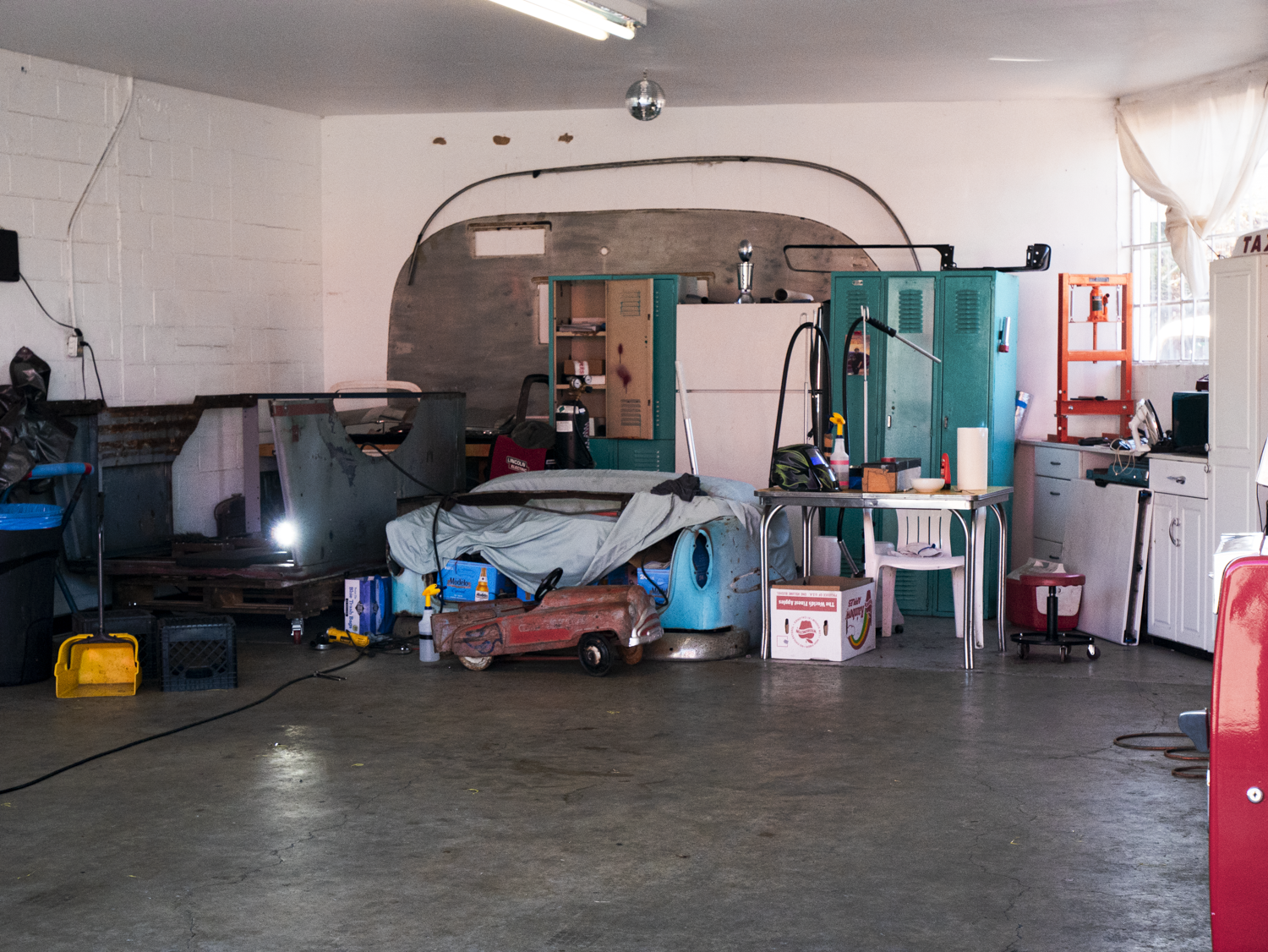
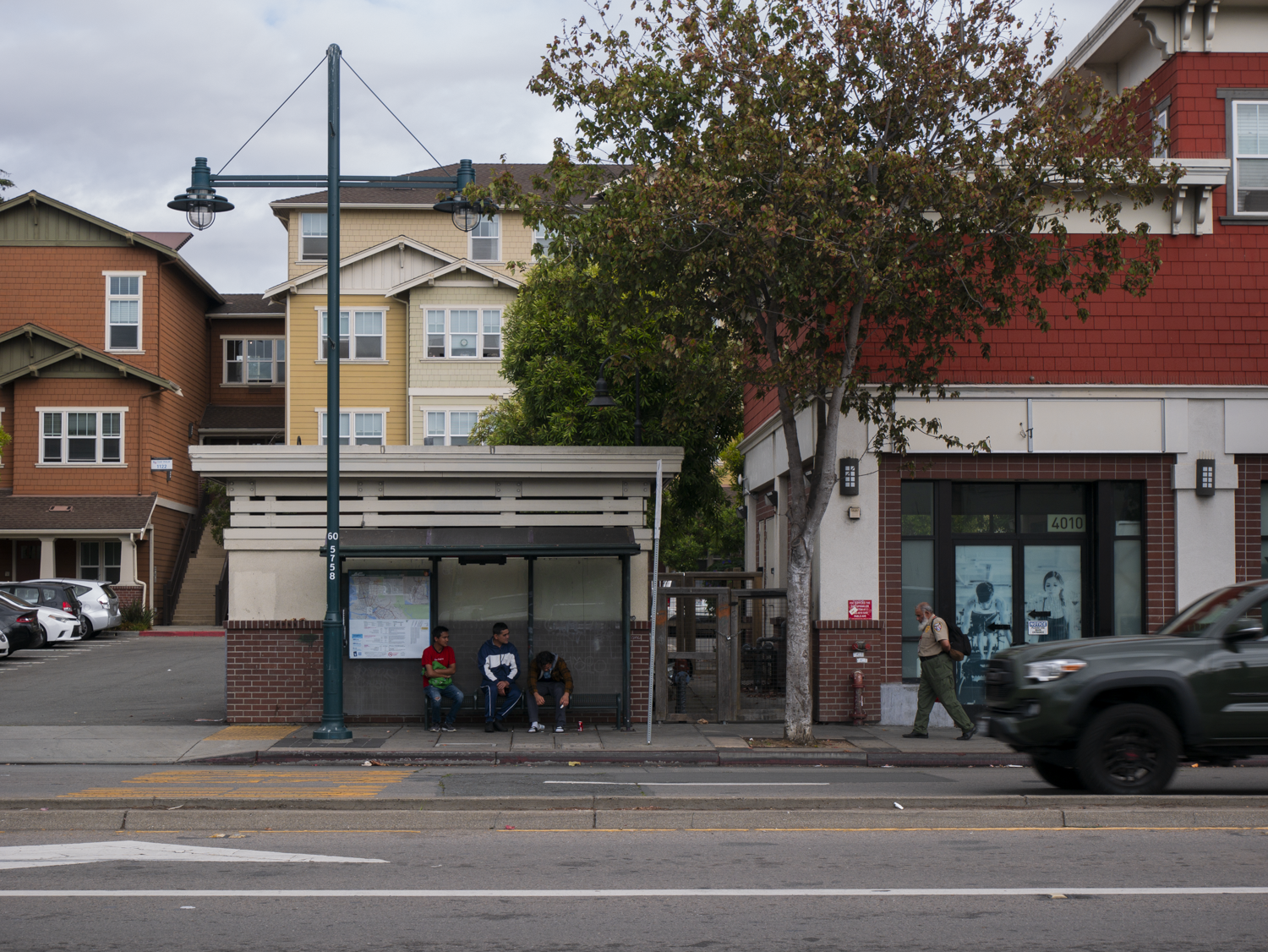
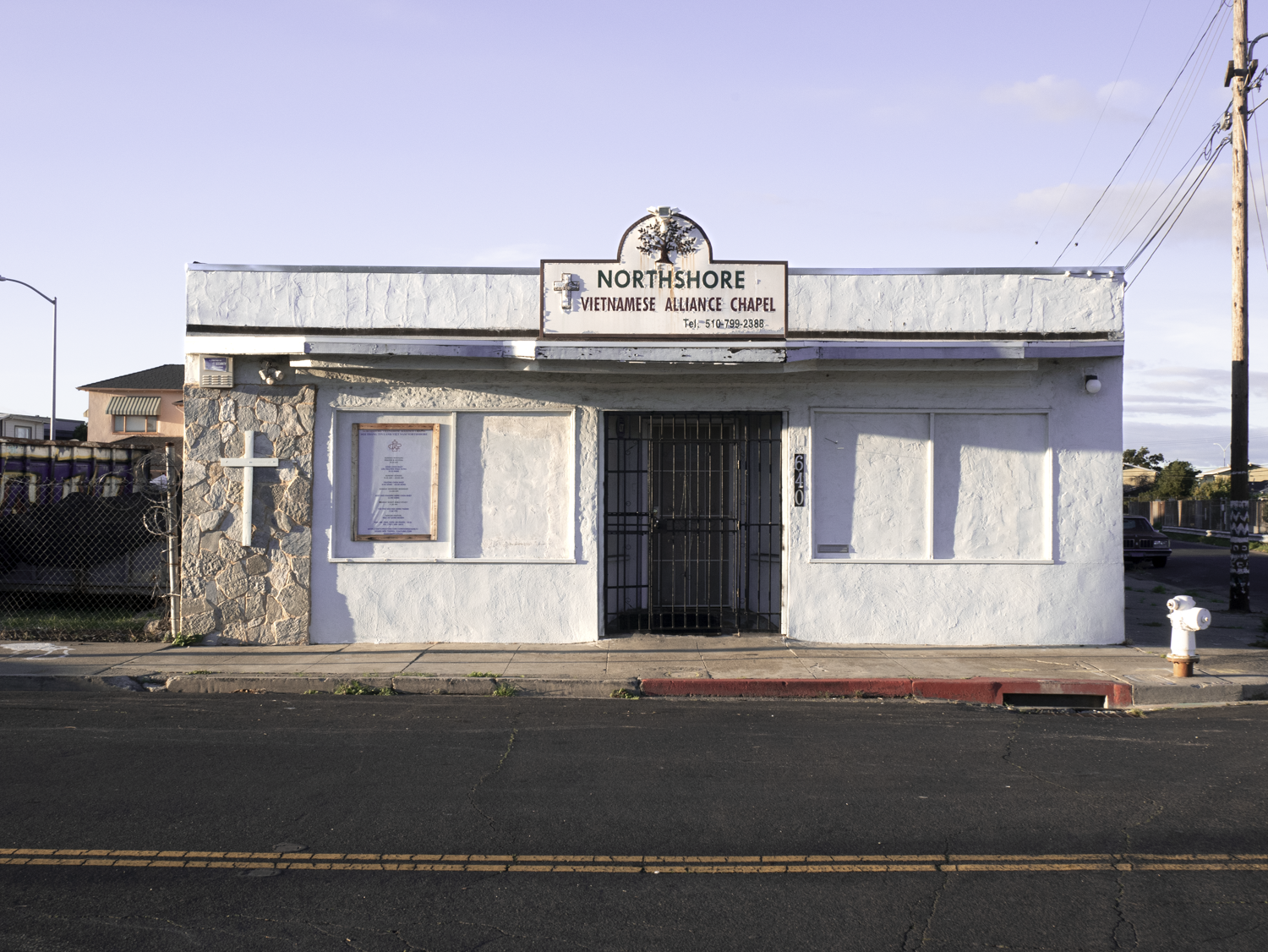
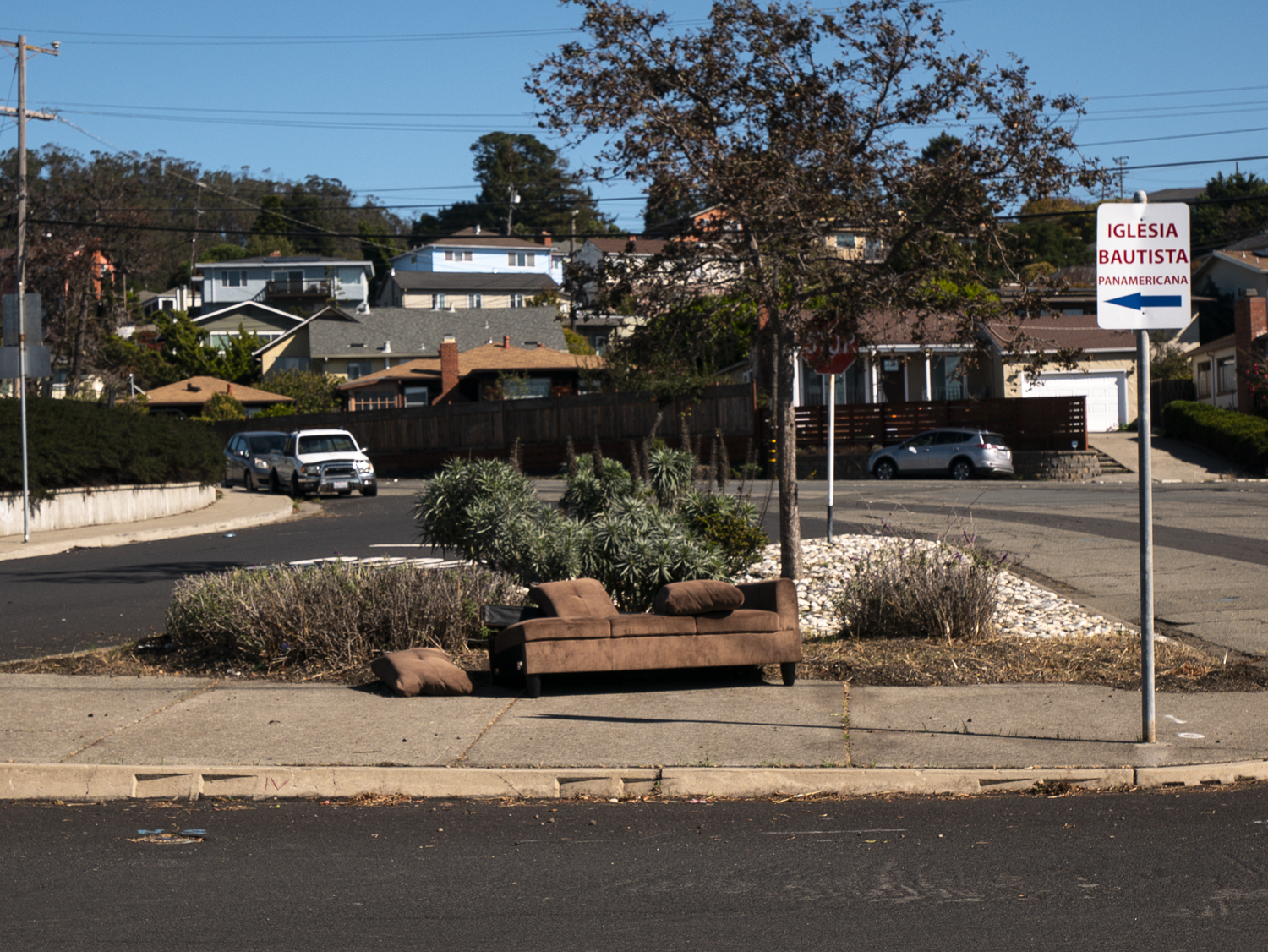
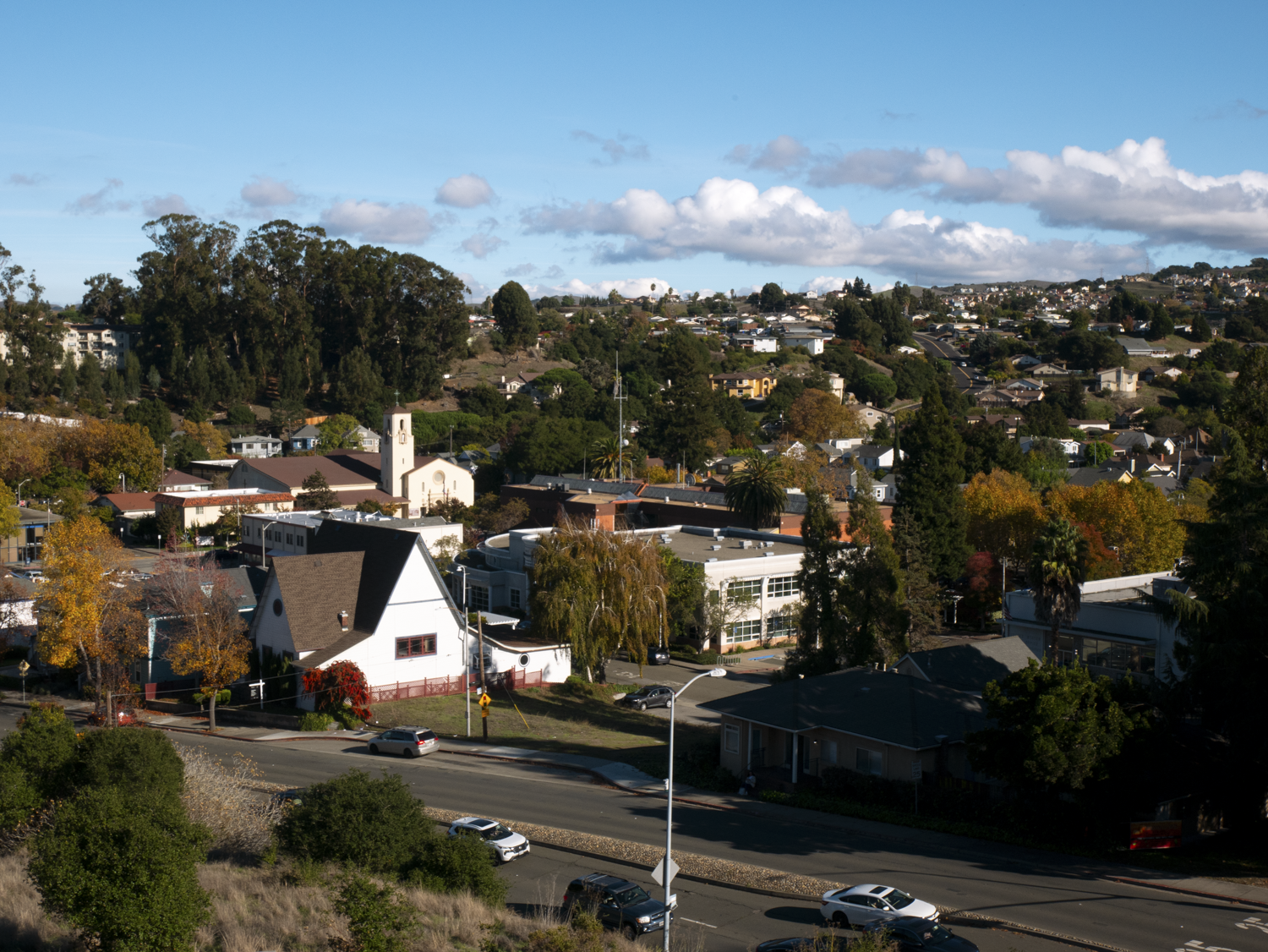
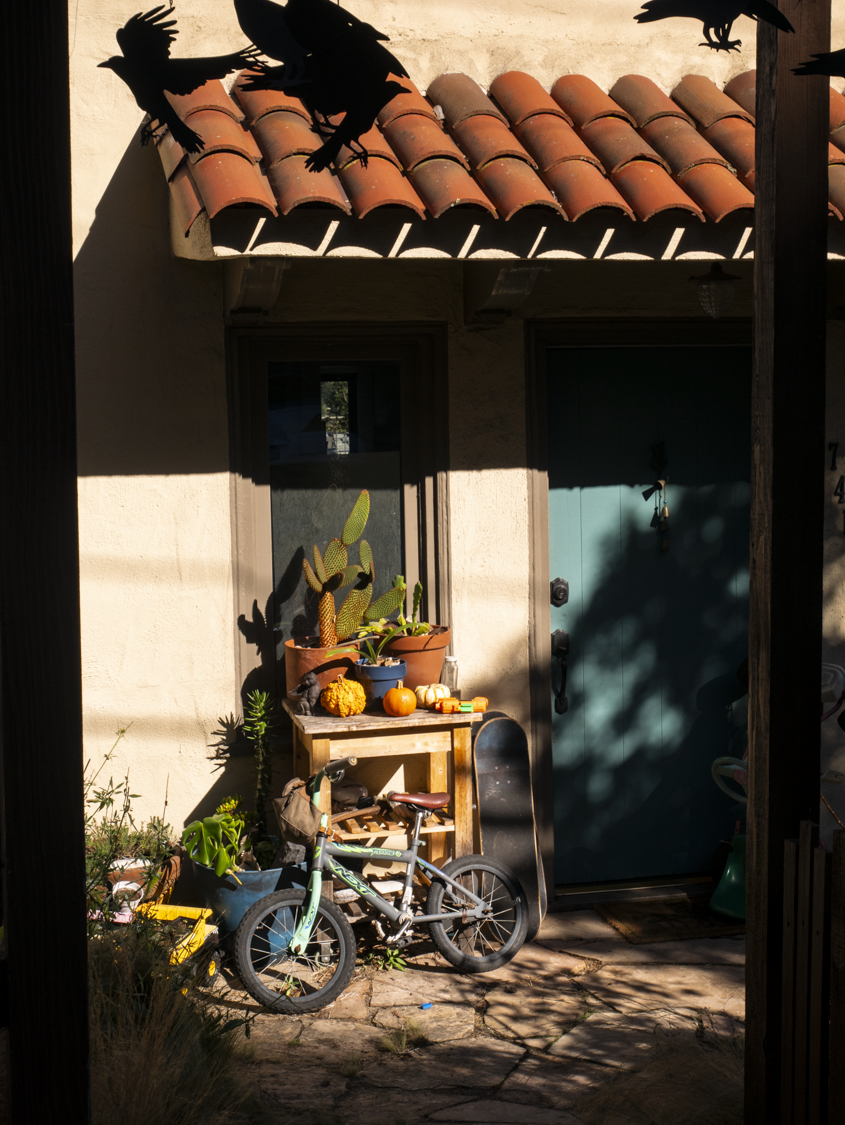
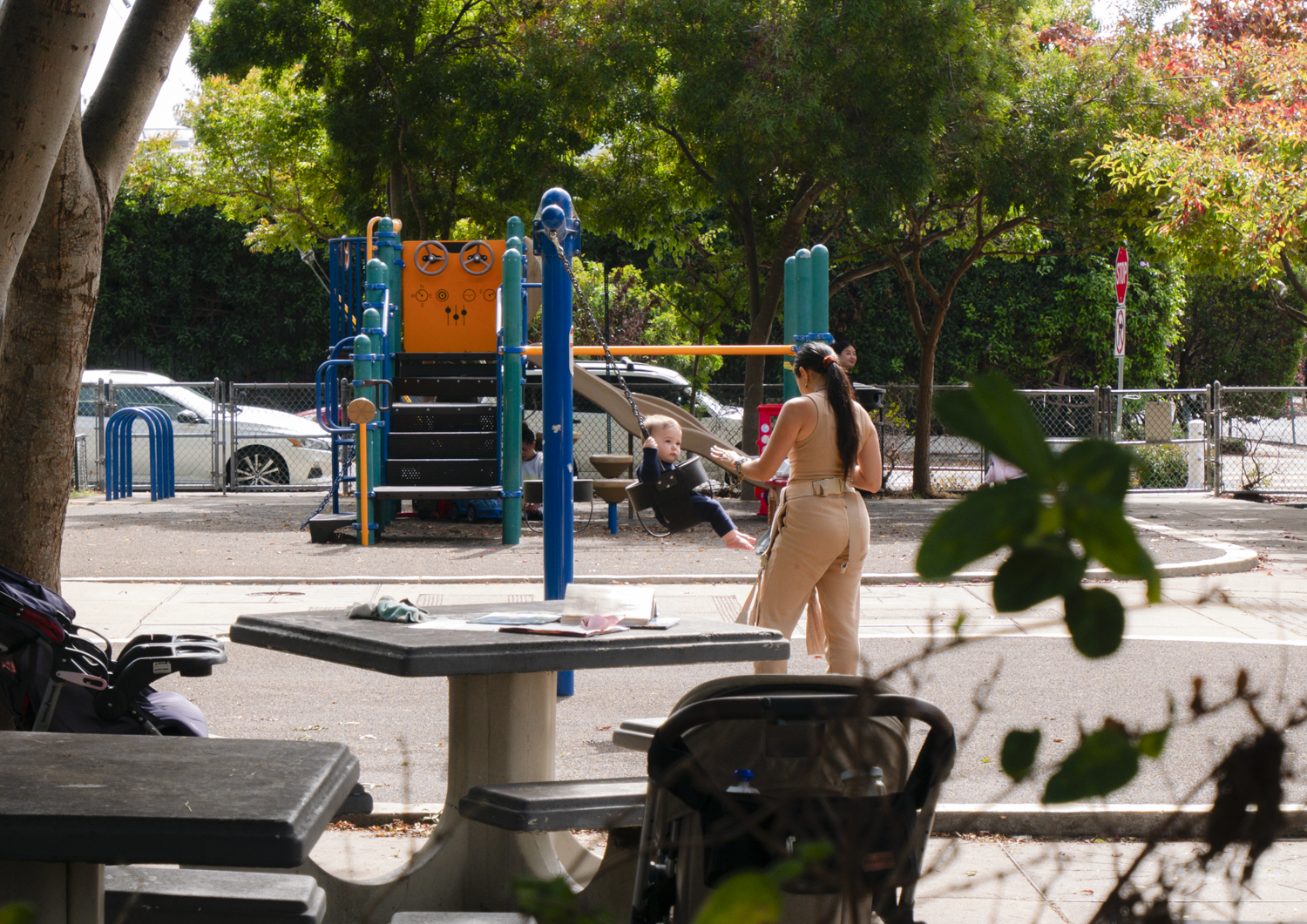
In my work, I set out to document the inclusivity and cultural layering expressed through San Pablo’s built environment. I gravitated towards storefronts, each carrying traces of community histories – African Caribbean markets filled with imported spices, Chinese insurance agencies offering services in multiple languages, etc. These businesses reveal the marks immigrants leave on the street, marks that evolve into the very identity of the avenue. At the same time, I became increasingly fascinated with everyday gestures: someone pausing at a bus stop, two people sharing a conversation outside a market…these small moments, often overlooked, say more about a place than its landmarks.
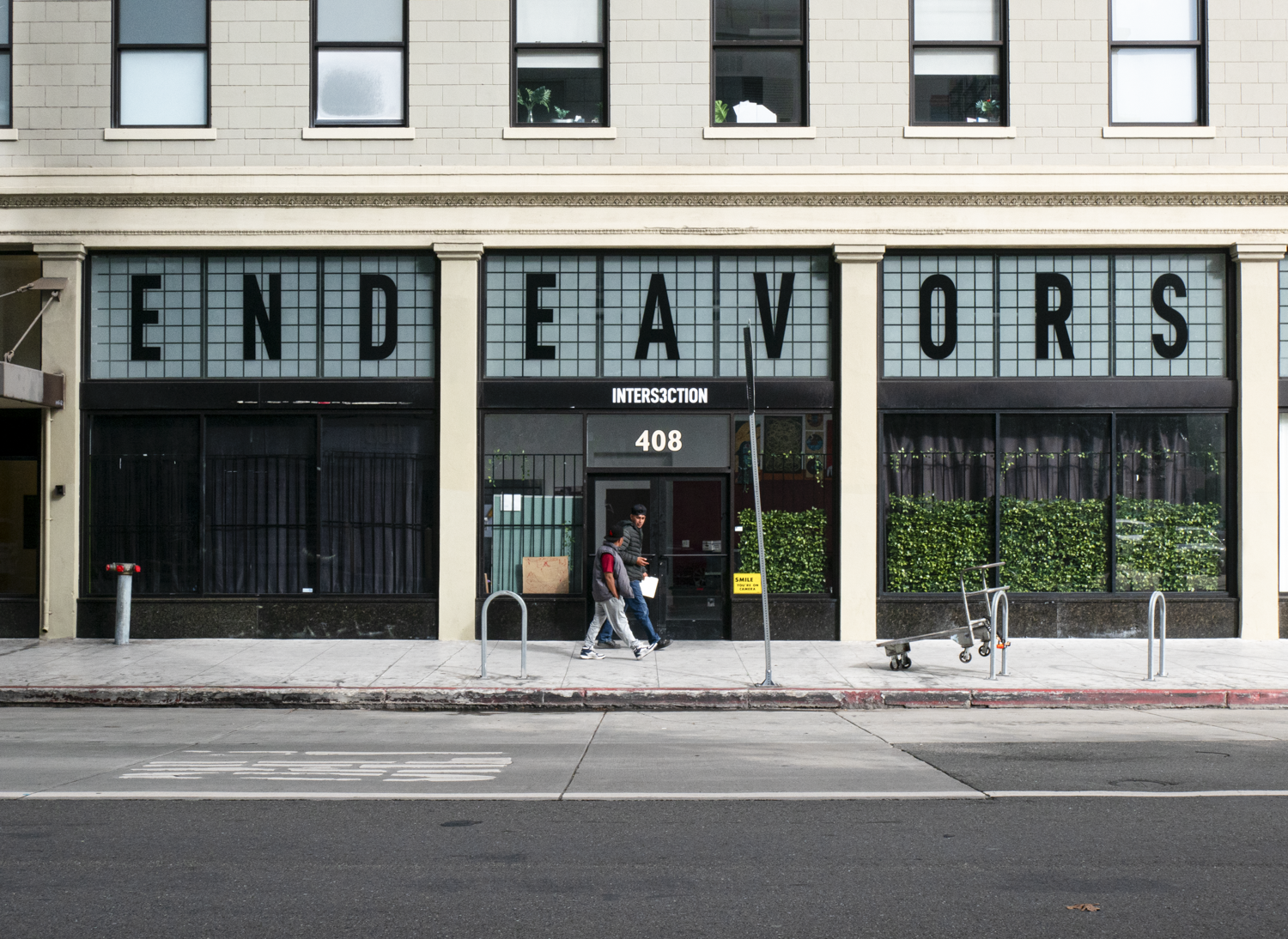
My process was shaped by several works we encountered in class. Jonathan Gold’s reflections in the Mapping Pico Boulevard podcast encouraged me to pay close attention to what kinds of places exist along San Pablo and how they reveal underlying cultural ecosystems. William Littmann’s observation that “you don’t see the verticality when you just look at the map. Verticality is something you measure with the body” shifted the way I walked. I became more attuned to elements that cannot be captured on maps: scents from a bakery drifting onto the street, the way afternoon light hits a faded storefront sign, or the hum of overlapping conversations. These bodily experiences informed my photography, guiding me not just to document what I saw, but to record what I felt. Carlos Araya Diaz’s El Viaje Espacial (from the film class) was a particularly significant influence. His technique of placing the camera in a fixed position and letting people enter and leave the frame as they naturally moved through their day fascinated me. It created a sense of time flowing within the image rather than around it. I tried adopting a similar approach for many of my shots of storefronts and sidewalks, allowing the camera to become a quiet participant, observing without intruding. This method gave my photos an openness, a sense that life continues both inside and beyond the frame.
Throughout this project, my understanding of San Pablo and of photography changed substantially. Living in downtown Berkeley, I rarely ventured west of Sacramento Street, partly out of habit and partly out of safety concerns. But as I walked towards the Marina and explored deeper into the neighborhoods surrounding San Pablo, I realized how narrow my world had been. The communities grew increasingly diverse with vibrant cultural cues in the shops, murals, and passing conversations. Carrying a camera helped me connect with people I would otherwise never approach. Many were curious and open, immediately launching into conversations about their work and their past. These interactions offered me an insider perspective, one that dissolved the psychological boundary I had long held about the “other side” of the city.
Technically, I expanded my skills in color correction and overall editing. In the beginning, I focused mostly on achieving a balanced image, adjusting shadows and highlights to mimic what I saw. Over time, I learned to embrace intentional stylistic choices, some inspired by methods I once dismissed as “low-quality.” Overexposing a shot to give it a washed, sun-bleached feeling, or softening certain areas of the image to create a dreamy texture, allowed me to reinterpret scenes rather than simply replicate them. I began to understand that photography is not just about accuracy; it is also about evoking memories and emotions at the shooting moment.
This project fundamentally reshaped how I view San Pablo Avenue and the community thrived on it, and how I approach photography. Through walking and connecting with people, I came to see San Pablo as a layered, living narrative shaped by immigrant histories, everyday resilience, and cultural interconnectedness. Influenced by artists and writers who emphasize embodied experience and the poetic potential of the ordinary, I developed a photographic approach that values both process and reinterpretation. Ultimately, the avenue taught me to slow down and look more carefully, and to use the camera not simply as a recording device, but as a tool for honoring the fleeting, irreplaceable moments that make a place meaningful.